Download

1 / 3
0 likes | 20 Views
Our knees are a complex network of bones, muscles, and ligaments, allowing us to walk, run, jump, and navigate the world. But with all that movement comes vulnerability. Knee injuries are incredibly common, affecting people of all ages and activity levels. Severe injuries often need surgery involving knee orthopaedic implants. <br>

E N D
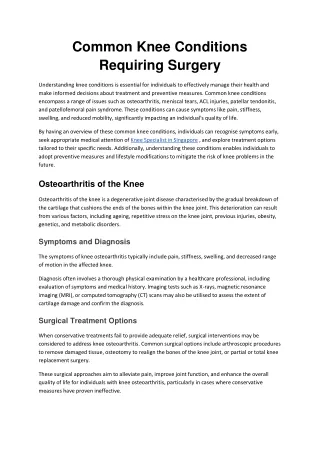
5 Common Knee Conditions - An Educational Guide Our knees are a complex network of bones, muscles, and ligaments, allowing us to walk, run, jump, and navigate the world. But with all that movement comes vulnerability. Knee injuries are incredibly common, affecting people of all ages and activity levels. Severe injuries often need surgery involving knee orthopaedic implants. Which Are the 5 Common Orthopedic Knee Conditions? Meniscus Tears These occur when the C-shaped pieces of cartilage cushioning your knee joint, called menisci (plural of meniscus), get ripped. This often happens during forceful twisting motions, common in sports like basketball or football. Symptoms include pain, swelling, a popping sensation, and difficulty fully bending or straightening the knee. Depending on the severity, treatment can range from rest and physical therapy to surgery to repair the tear. Anterior Cruciate Ligament (ACL) Injuries The ACL is a crucial ligament stabilizing the knee joint and preventing excessive forward movement of the shinbone. ACL tears are frequently seen in sports that involve sudden stops and changes in direction, like soccer or skiing. A torn ACL can
cause a popping sound, significant pain, instability, and difficulty bearing weight on the knee. Treatment usually involves reconstructive surgery followed by extensive rehabilitation. Ligament Sprains Ligaments connect bones in your knee joint, providing stability. Sprains happen when these ligaments are stretched or torn beyond their normal range. This can occur from a fall, awkward landing, or direct blow to the knee. Sprains vary in severity, with grade I being mild (microscopic tears) and grade III being the most serious (complete ligament tear). Common symptoms include pain, swelling, bruising, and difficulty moving the knee. RICE therapy and physical therapy are the most common treatment methods for this condition. Patellar Tendinitis This is an overuse injury affecting the tendon connecting your kneecap (patella) to your shinbone. It's prevalent in activities that involve repetitive jumping or running, like basketball or long-distance running. Symptoms include pain and tenderness right below the kneecap, often worse with activities like climbing stairs or jumping. Treatment focuses on reducing inflammation anti-inflammatory medications. Strengthening exercises are crucial for recovery and preventing future issues. through rest, ice, and Patellofemoral Pain Syndrome (PFPS) Often referred to as "runner's knee," PFPS is a pain syndrome around the kneecap. It's caused by repetitive stress on the kneecap and the cartilage underneath it. This can arise from activities like running, cycling, or squatting with improper form. Symptoms include a dull ache around or behind the kneecap, especially during or after activities. Treatment involves strengthening the muscles around the knee joint, improving flexibility, and addressing any biomechanical imbalances that might be contributing to the pain. Remember, this is not an exhaustive list, and any persistent knee pain should be evaluated by a healthcare professional. Early diagnosis and proper treatment can ensure a faster recovery and prevent long-term complications. How to Maintain Healthy Knees? Maintain a healthy weight: Excess weight puts extra stress on your knee joints. Warm-up and cool down before and after exercise: This helps prepare your muscles and joints for activity.
Strengthen the muscles around your knee: Strong muscles provide support and stability to the knee joint. Wear proper footwear: Supportive shoes are essential for activities that put stress on your knees. Listen to your body: Do not push your body when in pain. Rest when needed to avoid further injury. If you are looking for a CE-certified range of knee arthroscopy implants, find an experienced Supplier for Orthopedic Implants in Thailand. Contact Information Siora Surgicals Pvt. Ltd. Address: WZ-1 2ndFloor, Phool Bagh, Ram Pura, New Delhi- 110035, India Mobile:+91 9810021264 Email: info@siora.net Source: https://code-masters.mn.co/posts/common-knee-conditions-an-educational-guide





![[READ]⚡PDF✔ Needleless Acupuncture: Self-treatment guide for 40 common conditions](https://cdn7.slideserve.com/12915434/needleless-acupuncture-self-treatment-guide-dt.jpg)