Download
1 / 6
60 likes | 191 Views
In colonial America, currency included coins and scarce paper money, making barter a common practice for exchanging goods and services. Farmers frequently relied on trading tangible items instead of money due to the limited availability of currency. For example, a tobacco farmer could barter his harvest, which served as a form of money, to acquire necessary goods. Additionally, credit systems were in place, allowing consumers to purchase goods and settle debts after harvest time. Understanding these economic practices is essential for comprehending life in colonial Virginia.

E N D
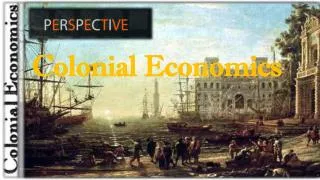
Colonial Economics By Miss O.
Money • A medium of exchange • Currency, which includes coins and paper bills • Few people had paper money and coins to use to buy goods and services. • Share the 2 sentences you wrote down about your colonial character and what he or she might have bartered to get what he or she needed to live on.
Barter • Trading/exchanging of goods and services without the use of money • Barter was commonly used instead of money.
Credit Debt • A good or service owed to another • Buying a good or service owed to another • Farmers and other consumers could also buy goods and services on credit and pay their debts when their crops were harvested and sold.
Saving • Money put away to save or to spend at a later time. • Colonial Virginia had no banks.
Tobacco = $$$$ • Tobacco was used as money. • A tobacco farmer could use his tobacco to pay for goods and services.