Nervous System
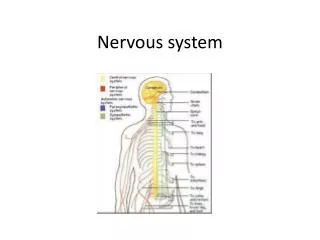
The nervous system is a complex network that controls functions throughout the body by processing information from internal and external environments. It is divided into the Central Nervous System (CNS) and Peripheral Nervous System (PNS), where neurons transmit impulses through axons and synapses. Neurotransmitters play a key role in communication between neurons. Reflex actions, such as lifting a leg when stepping on a tack, demonstrate how sensory receptors and neural pathways work together to elicit quick responses. This intricate system ensures coordination and reaction in our daily activities.

Nervous System
E N D
Presentation Transcript
Nervous System How does the structure of the nervous system allow it to control functions in every part of the body?
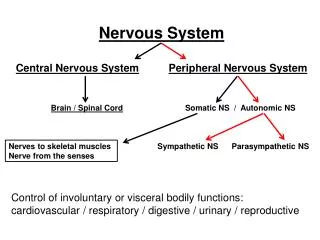
Nervous System Central Nervous System Peripheral Nervous System
Functions of the Nervous System Collects information about the body’s internal and external environment, processes that information, and responds to it.
Neurons Nervous system impulses are transmitted by cells called neurons. Once an impulse begins it will continue down an axon until it reaches the end.
Synapse The point at which a neuron transfers an impulse to another cell. Neurotransmitters: Chemicals that transmit an impulse across a synapse to another cell.
Reflexes When you step on a tack, sensory receptors stimulate a sensory neuron, which relays the signal to an interneuron within the spinal cord. The signal is then sent to a motor neuron, which in turn stimulates a muscle that lifts your leg.