Download
1 / 14
140 likes | 248 Views
Delve into the short and long-term factors leading to the Great Depression, from stock market mania to overproduction, bank failures, and worldwide economic impacts. Learn about the drastic effects on the economy, unemployment rates, and societal disparities.

E N D
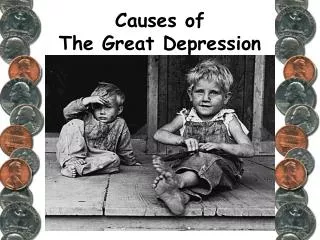
Causes of the Great Depression(1929-1939) Short and Long Term
The Stock Market • As the economy took off in the 1920s, so did the stock market (law of supply and demand) • Market Mania - everyone who could afford stocks (and some who couldn’t were buying)
“Purchasing stocks every paycheck is the surest way to financial success.”- Chairman of General Motors - 1929
TheBoom • Stock Exchange - organized system for buying and selling shares in corporations • By 1929, 10% of Americans owned stock • Buying on Margin - people began to borrow money from stock brokers to purchase more stock. People did not sense any risk.
The Crash - (Short Term Cause) • Late September, 1929 - investors begin to sell off stocks, resulting in dropping prices for the first time. Brokers demand repayment for stock bought on margin. • Black Thursday (10/24/29) - investors panic and sell off stocks at low rates • 10/29/29 - 16 million shares sold and prices plummeted • NYSE closed for a few days to stop panic selling
How Bad was the Great Depression? • GNP went from $104 billion in 1929 to $58 billion in 1932 • Unemployment rate was 25% in 1932 and stayed around 20% through the thirties
Overproduction • Factories - made so many goods that they couldn’t sell them • Farms - to recover from low prices, farmers INCREASED production. Bad move. • No Markets - Customers had purchased all the durable goods they needed in buying spree of 20s
Gap Between Rich and Poor was Too Wide • In 1929, 33% of wealth in hands of only1% of population • 75% of Americans live at or below the poverty line
Credit Crisis • Consumers were buying goods on credit • When they lost their jobs, they couldn’t pay their debts. • Interest kept increasing their balances even if you don’t spend any more
Bank Failures - Warning: This is tricky! • When you take money to the bank for savings, they pay you 2% • The bank takes your money and loans it to someone else at 8% (thus, the 6% difference is how they make money) • During the Depression, people needed money and went to the bank to get their savings • The bank had loaned it out and no one was paying it back. Thus, people lost their savings. • Banks who ran out of money were said to fail.
International Depression • Most of world still rebuilding from WWI so they have no money, either • Smoot-Hawley Tariff Act (1930) - Congress passes a high tariff to protect American companies. • In response, countries get mad and charge a tariff on U.S. goods, stopping U.S. trade
Unemployment • Because of overproduction and lack of markets, workers lost jobs • In 1932, 25% of Americans were unemployed (10% is considered bad) • 20% unemployed for most of 1930s • Unemployed people do not spend, further hurting economy • Hoovervilles - shacks built from scrap by homeless to live in