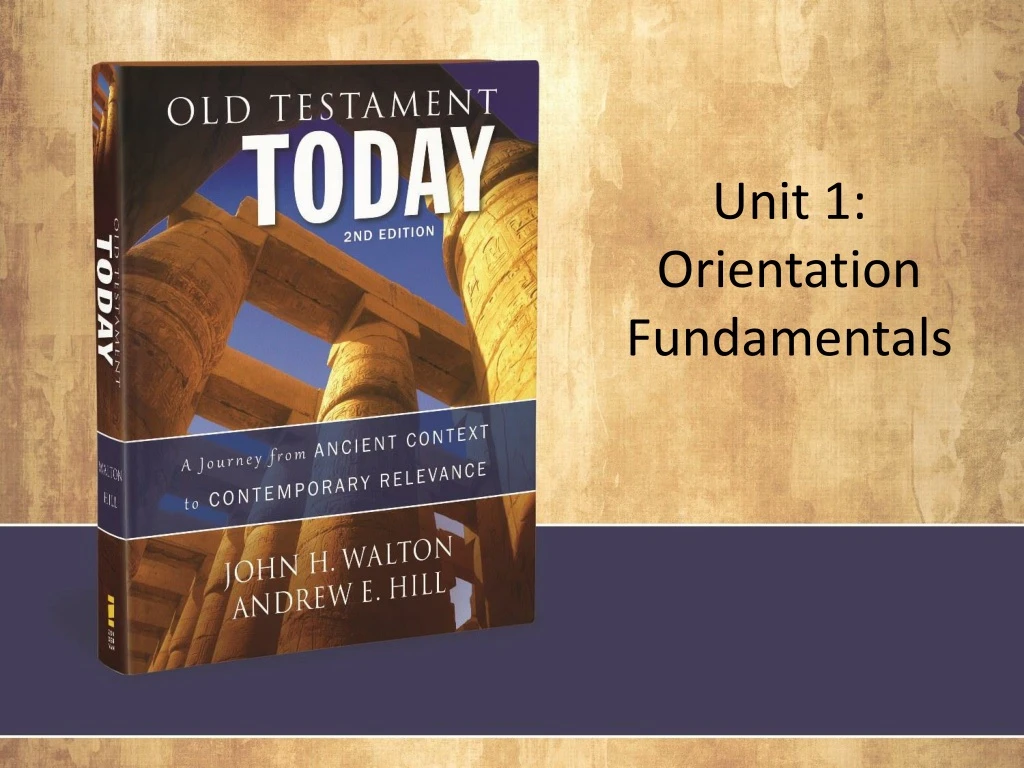
Unlocking the Old Testament's Big Story
2.18k likes | 2.2k Views
Explore the Old Testament as a revelation of God's story and authority, understanding its plotlines and themes. Discover the literary and theological aspects, including key figures like Abraham and the theological concept of covenant.


Unlocking the Old Testament's Big Story
E N D
Presentation Transcript
About the Old Testament • The Old Testament is a book • The Old Testament is a part of a book • The Old Testament is a collection of books
The Big Story Line/Plotline • Creation • Fall • Flood • Tower of Babel • Patriarchs • Sojourn • Exodus • Wilderness • Conquest • Judges • United Kingdom • Divided Kingdom • Exile • Return
It is not enough to know what the Old Testament is; we need to reorient what it does.
Reorientation: Old Testament as Revelation • In the Old Testament, God is telling us his story. • Revelation allows us to know what God is like rather than guess
Reorientation: Old Testament as Scripture • Because we accept these claims of the Bible to be God’s revelation, we label it as Scripture • Not just a sacred book • Without the Bible, we would know nothing about God with any confidence
Reorientation: Old Testament as Authority • Center of authority • Tells us what to think and believe • Tells us what God is like • Center of worldview • End result
Expectations and Procedures • Study the text with an eye toward the big picture • Old Testament as tapestry • Old Testament as photomosaic
Plotline and Story Line • Plotline – traces the big picture • Story line – an array of facts
Old Testament Study • Language • Comparative Studies • Biblical texts • Textual criticism • Sources of compilation • Literary analysis • Theology
Face Value • Nature (Genre) of Literature • Genealogies • Narrative • Cultural Background • Focus of Revelation • Exegesis • Hermeneutics • Confidence
Writing and Books • Invention of writing • Writing surfaces • Oral presentation • Dating
Unit 2:The Pentateuch Chapter 1: Introduction to the Pentateuch and Its Time
Elements of Story • Plot • Setting • Characters • Point of View • Plot Emphasis vs. Character Emphasis
Story Guides • Selection • Arrangement • Emphasis • Authorial Intention
Mesopotamia: Sumer through Old Babylonia • Sumerians • Dynasty of Akkad • Ur III • Old Babylonian Period
Canaan: Middle Bronze Age • Abraham • Syria • Palestine • Contact with Egypt
Egypt: Old and Middle Kingdoms • Old Kingdom • Sixth Dynasty • First Intermediate Period • Twelfth Dynasty • Hyksos • Eighteenth Dynasty
Walking Around in the Ancient Near East • Typical distance travelled • Major routes • Strategic location of the land
Major Archives • Ebla • Hittite • Nuzi • Emar • Ugarit • Amarna • Nineveh
Unit 2: The Pentateuch Chapter 2: Introduction to the Literature and Theology of the Pentateuch
Literary Background: Internal Characteristics • Five individual books • One single book • Building blocks • Promise • Election • Deliverance • Covenant • Law • Land
Literary Background: Comparative Literature • Cosmologies • Different view of deity • One God • Creation without conflict • Similar worldview • Creation as assignment of function • Creation as temple-making
Literary Background: Comparative Literature • Genealogies • Theological role • Stark contrast to genealogies in ancient Near East • Flood Stories • Atrahasis Epic • Gilgamesh Epic • Comparison with biblical account
Literary Background: Comparative Literature • Law Collections • Similarity to Hammurabi • Function of law collections in the ancient Near East • Function of the legal sections of the Pentateuch • Priestly Regulations • Hittite Instructions for the Temple Officials • Mesopotamian incantations and rituals • Biblical literature
Literary Background: Comparative Literature • Covenant/Treaty Format • First and Second Millennium examples • Similarity to biblical literature • Conclusions • Opportunity to read as the Israelites read • Gain entry into their worldview
Theological Perspectives: Creator • Order from disorder • Cosmic temple • Garden as sacred space • People as priests
Theological Perspectives: The Fall • Greatest loss – Access to God’s presence • What sin did to God
Theological Perspectives: Covenant • The covenant and Abram • Leaves • Land • People • Father’s house • Receives • Land • Family • Blessing • The covenant and God • Establishes relationship in the human realm • Resolves the Babel Problem • Revealed God to the world
Theological Perspectives: AbrahamHis Heritage and His Legacy • Polytheistic beliefs of the ancient Near East • Personal gods in the ancient Near East • Dominance of Yahweh in Abraham’s religious experience
Theological Perspectives: ElectionA Chosen People • Election connected to the covenant • Implications for Israel
Theological Perspectives: Sanctuary and the Presence of God • Covenant • Role of the Tabernacle • Individual worship • Corporate worship • Priests offered daily sacrifices • King involved • Construction of the tabernacle
Theological Perspectives: Holy Land and Sacred Space • Maintenance of sacred space • Sacred compass • The camp
Theological Perspectives: Priests and Sacrifice • Principal job of priests – preserve the sanctity of sacred space • Primary goal of sacrificial system – restore the purity of the sacred space of object • Function of sacrifices • Praising God • Making requests of God • Maintaining the holiness of God’s presence
Unit 2: The Pentateuch Chapter 3: Introduction to the Books of the Pentateuch
Genesis • Purpose: Begins the story of the covenant • Genesis 1-11 • Genesis 12-50 • God’s mastery • Creation • Covenant • History
Genesis • Plotline • Firmly grounded in the covenant • Plan for order and reconciliation • Beginnings • Orderly cosmos out of disorder • Role of humans • Sin and its escalation • Noah’s ark • Babel
Genesis • Patriarchs and Matriarchs of Israel • Abraham • Lot • Hagar • Sarah • Isaac • Jacob • Leah and Rachel • Laban • Joseph • Brothers • Potiphar • Pharaoh • Famine
Exodus • Purpose: God’s presence among his people • Deliverance from slavery in Egypt • Presence with Israelites through the wilderness • Tabernacle and priesthood • Legal collections
Exodus • Summary: In Egypt • Apparent disarray of the covenant • Drastically different from initial situation • Moses • Rescue from slavery • Self-revelation of God • Detour in the Wilderness
Exodus • Date of the Exodus • Sinai and the Wilderness • Ten Commandments • Instructions of the tabernacle • Golden calf
Leviticus • Purpose: Details the management of sacred space, sacred status, and sacred time • Sacred space • Sacred status • Sacred time • Structure of the book
Leviticus • Priests in Israel • Names of God • Kosher diet • Law as Grace
Numbers • Purpose: to contrast the faithfulness of God with the faithlessness and rebellion of the Israelites • God keeps his promises • Grumbling of the people • Reluctance to go into the land • Years in the wilderness
Numbers • Summary • Two major transitions • Continues themes • From Genesis – covenant • From Exodus – God’s presence • From Leviticus – God’s holiness • Sacred time and seasons
Deuteronomy • Purpose: to summarize and renew the covenant in preparation for Israel’s entrance into the land • Comprised of series of speeches delivered by Moses before the Israelites cross into the Promised Land • Emphasizes the issues of one God, one people, one sanctuary, and one law