Download
1 / 8
150 likes | 470 Views
This program focuses on developing students' independent writing skills by exploring topics such as purpose, audience, message, genre, and text conventions. The process includes planning, generating information, organizing, setting goals, translating ideas into text, reviewing, evaluating, and revising. Additionally, students will engage in directed writing and reading activities to enhance their literary understanding and craft. Through conferring and guided discussions, students will learn to view themselves as writers and readers, developing a variety of perspectives and expanding their comprehension.

E N D
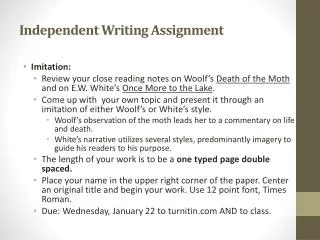
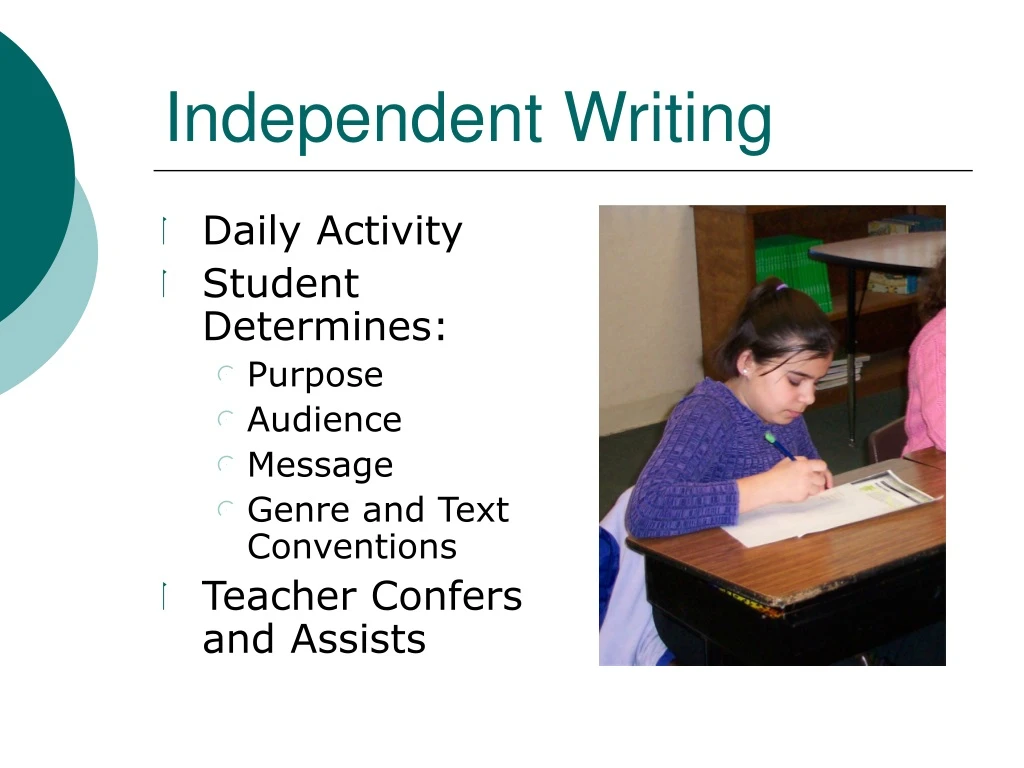
Independent Writing • Daily Activity • Student Determines: • Purpose • Audience • Message • Genre and Text Conventions • Teacher Confers and Assists
Process Writing • Planning • Generate information • Organize • Set goals • Translation • Mechanics of writing • Review • Evaluate (Did I stick to my plan?) • Revise
Topic Information Topic Information Purpose & Key Point Audience Text Conventions The Planner’s Blackboard
Directed Writing Directed Reading Read Aloud Shared Reading IR/IW Conferring Writer’s Craft • Thinking as a writer • Purpose • Audience • Planning & Organizing • Book Language & Literary Styles • Writing Schemas and Genres • Conversational Learning • Build Oral Language Structure • Vocabulary • Understanding
Key Ideas Instructional Focus: • Viewing self as a writer • Looking at the world like a writer • Reading text like a writer • Writing for a variety of purposes and developing a sense of audience.
Conferring Points • What is my purpose? • Who is my audience? • Is my message clear? • What are my key points? • How did I organize my text? • Did I follow my plan? • Did I achieve my purpose?
Independent Reading: Conferring • Where is the author taking me in this story? • Am I paying attention to the author’s message? • What lesson is the author teaching me? • Why did the author choose this story to tell? • What information is the author trying to explain to me? Chrys Hutchins
Independent Reading: Conferring (continued) • When I finish this book, what would the author like me to remember? • Why is the author spending so much time with this scene, character, topic conflict, resolution, clue, or fact? • Have I figured out the author’s big idea? Chrys Hutchins