Download
1 / 18
190 likes | 308 Views
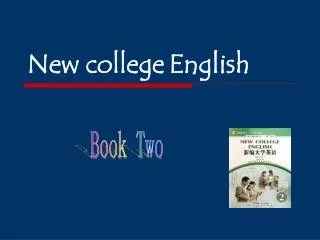
New College English Basic Course Unit 11 Born to Win. Content. Preparation Listening-centered activities Reading centered activities In-class reading Pre-reading question Farming for the Future Assignments After-class reading Passage I Dairying and Dairy Products

E N D
Content • Preparation • Listening-centered activities • Reading centered activities In-class reading Pre-reading question • Farming for the Future Assignments After-class reading • Passage I Dairying and Dairy Products • Passage II The History of Agriculture • Further development
Preparation-1 • Do you think anybody is born to win? • Who do you think is the winner in his/her life? • Look at some pictures.
Preparation-2 • Word association • 1.crops: • grains: rice, wheat(小麦), millet(黍的子实), barley(大麦), corn, oat(燕麦)broomcorn(高粱) • fruits: apple, pear, pineapple, watermelon, plum, grape, lemon, mango, cherry, orange, banana, lychee/lichee, strawberry, peach, banana • farming animals: cattle, cow, ox, horse, pig, dog, sheep, goat, hen, chicken, duck, goose, turkey • farming tools: spade(锹), sickle (镰刀), hoe(锄头), plow(犁), tractor, grain combine(联合收割机)
4)farming methods: plowing, tilling, planting, harvesting, processing, weeding, fertilization, irrigation • Now let’s appreciate the pictures of farming.
Liu Xiang 刘翔
Listening-centered activities • Answers to exercises: Listening 1 Exercise 1 1. Twenty-two 2. She almost died. 3. 4 4. At the age of 9. 5. When she was 13. 6. The same year./ At the age of 13. 7. The last. 8. 3
Listening 2 Exercise 1: 1) go one 2) song 3) true love 4) see 5) believe 6) sky 7) fly away 8) open door 9)silence 10) achieve Listening 3 Exercise1: 1-5 C B A B D
Reading-centered activity: In-class reading • Pre-reading task: • Preview the word list. Try to find words of other forms of these words, etc. noun, verb, adjective or antonym.
Language points • biogas: bio-: concerning living things e.g. biochemistry, bioelement(生命必要元素) bioenergy, biosphere(生物圈) erosion: erode (v.) erodent (a.) erodible, erosible insecticide: -cide (-icide): killing e.g. pesticide suicide percentage: -age: bandage, marriage, blockage, shortage, carriage, package, advantage, breakage, heritage,
Questions for discussion • 1.The author of the passage suggests that people in industrialized countries eat less meat so that more food could be saved for hungry people in the world. What else do you think they should do to help people living in poverty.? • As a person living in a less-developed country, what can you do to help reduce poverty, hunger and destruction of the earth’s resources?
Answers to translation exercises: • 1) The best way to lose weight is to avoid eating fatty foods. • 2) One of the main causes of hunger used to be lack of transportation. • 3) Wasteful packaging will add to the price of food / food price. • 4) Economic reform would not be successful without the development of agriculture. • 5) The farmers will grow more cash crops next year instead of grains. • 6) At present, farmers in some places in the world are still making use of animal labor.
After-class reading Passage 1: Better Late than Never • Harlan Sanders: the founder of Kentucky Fried Chicken
Passage 2 The Pursuit of Excellence • Winston Churchill(1874-1965): the prime minister of Great Britain
Abraham Lincoln (1809-1865) • The sixteenth president of the U.S.