Download
1 / 9
90 likes | 216 Views
This guide provides essential strategies for writing articles and outlining assignments effectively. It emphasizes the need for organization, advocating for shorter paragraphs and a clear structure, including the who, what, when, and where. Students are encouraged to research their topics thoroughly, utilizing quotes and paraphrasing correctly while ensuring to cite their sources. The guide also highlights the importance of engaging openings and impactful conclusions, paving the way for a comprehensive understanding of the nuances in article writing compared to traditional essays.

E N D
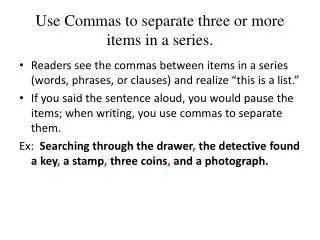
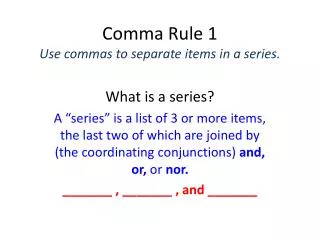
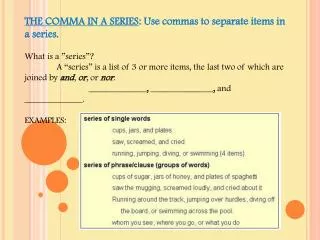
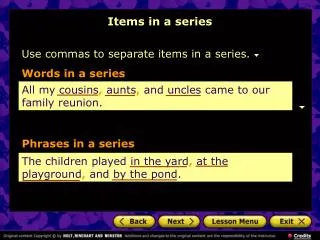
Combine using items in a series. • The food pantry is in need of canned items. They also need fruits and vegetables.
Comp 3, LAP 3, Day 5 • Article analysis • Organization • Outlining
Homework • Finish researching your location/ event– bring your sources to next class. • Website evaluation forms are due by next class. • Begin your outline—you can use the template from LAP 1 again, if you like. It’s on www.iwateague.weebly.com. • Open Labs: • Vocab Lesson 12 work is due J day; quiz is due K day. • ACT writing extra credit is due F day, 4/4. • LAP 3 Grammar is due B day, 4/15.
Organization • How is a news article different than a traditional essay? • Shorter paragraphs, more of them. • Most paragraphs start with a quote • Detail used only where needed. • Some emotion, but mostly facts. It’s more about what others think, not about the author. • Casual academic voice– no you’s, etc. • Unique phrases to catch audience’s attention.
Organization • Shorter, choppier articles • Often alternates between interview responses and facts • Start with the who/what/when/where • Spend the rest of the article exploring the why and the how • Start with a hook, end with a clincher.
Take out a piece of paper… • 1. Cut or tear it into small pieces. • 2. Write a topic/ idea about your event or location that you could include in your essay. • 3. Arrange them in the order you want to cover these ideas in your essay. • 4. Write down your arrangement and turn this into your outline.
Outlining • Use it to simply establish the order you want to cover information in your article.
How to use outside information • Any time an idea you are using is not your own, you must quote or paraphrase it and cite it. • This includes interview responses, and information from books, brochures, magazines, newspapers, and websites.