Understanding Visual Rhetoric: Decoding Images as Symbols and Language
This exploration of visual rhetoric examines how images function as symbols that represent objects, actions, ideas, or concepts. By learning how to "read" images through the process of de-coding, we can interpret their meaning much like written texts. The concept of visual literacy is defined as the ability to understand and communicate using images. We also consider the powerful emotional impact of images, their rapid cognitive processing, and their versatility in various contexts. Understanding these elements enriches our comprehension and appreciation of visual communication.

Understanding Visual Rhetoric: Decoding Images as Symbols and Language
E N D
Presentation Transcript
Images as Symbols Like written words, images are symbols that represent an object, action, idea, or concept.
De-coding Images • Because image texts are not always an explicit photographic representation of something, we must learn to “read” them, the same way we learn to read a written text. This is often called “de-coding.”
Images as Language • And, just like word-only texts, images exist as a kind of “language,” which often must be learned within the context of a certain culture.
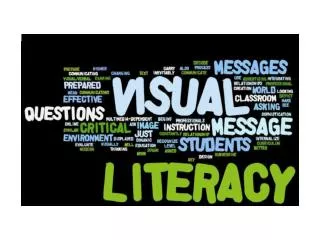
Definition of Visual Literacy • The ability to interpret, evaluate, and make meaning from information presented in the form of an image. • The ability to communicate by the use of images within a textual form.
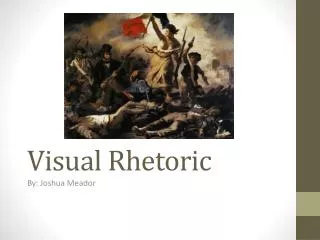
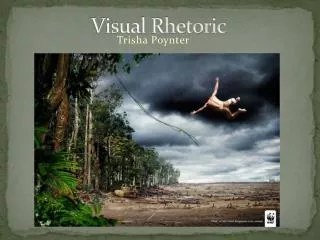
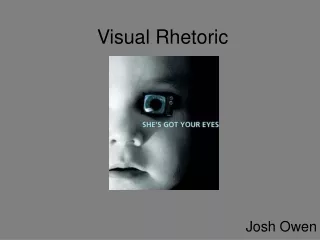
Images in Context • What are all the things you’d have to know to “de-code” the “language” in this image?
Why are Images so Powerful? • Images are evocative – they elicit strong emotions • Images are processed cognitively more quickly than written text • Images are open to interpretation • They can appeal to many different viewers • They can be used in many contexts
What are some of the contexts in which this image could be used?