Mass Spectrometry and Chromatography: Techniques for Ion Analysis and Separation
This text covers essential concepts in mass spectroscopy and chromatography, focusing on ion analysis and separation techniques. We delve into the significance of nominal mass, exact m/z resolution for stoichiometry, isotopic peaks, and fragmentation methods, particularly in Electron Impact (EI) settings. Key separation techniques such as precipitation, distillation, extraction, ion exchange, and chromatography are explained, highlighting properties like solubility, size, polarity, and boiling points. We also explore chromatographic methods, emphasizing the roles of mobile and stationary phases.

Mass Spectrometry and Chromatography: Techniques for Ion Analysis and Separation
E N D
Presentation Transcript
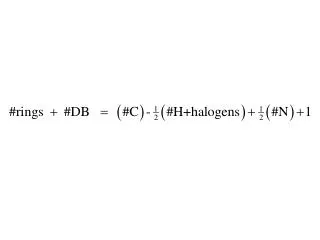
MS Interpretation • Nominal M+ - gives mass of ion • Exact m/z (high resolution) – get stoichiometry (each atom has exact mass) • Isotope Peaks • C+1 = 1.1%, O+2= .2% • Fragmentation – important with EI • What was lost? [(M-15)+ - loss of CH3]
Separations and Chromatography Chapters 26 – 28
Types of Separations • Precipitation/filtration • Distillation • Extraction • Ion exchange • Chromatography • Electrophoresis
Common properties exploited by separations • Solubility • Size • Polarity • Boiling point • Electrical mobility
Chromatography – collection of methods that involve separation between 2 phases • Mobile phase • Stationary phase
Silica Gel, Alumina, Cellulose Silca Gel SiO2 Cellulose Alumina Al2O3
Elution – migration of analyte due to mobile phase. Chromatogram – Graph of signal vs elution time • More strongly retained species elute last • Analyte diluted during elution