Contraception
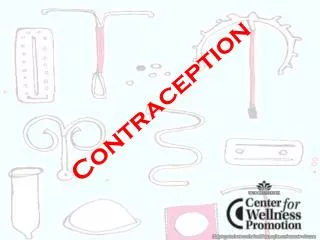
This guide explores four primary types of contraception: Barrier, Chemical, Permanent, and Natural methods. Barrier methods, like condoms and diaphragms, physically block sperm. Chemical methods, such as birth control pills and IUDs, prevent ovulation or destroy sperm. Permanent options like tubal ligation or vasectomy surgically prevent pregnancy. Natural methods rely on understanding the body's fertility signals. Each method's effectiveness, usage, and specifics are detailed to aid informed family planning decisions.

Contraception
E N D
Presentation Transcript
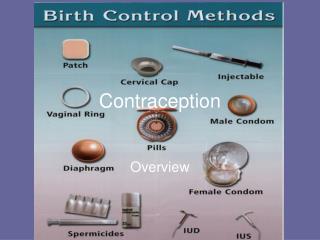
Four Types of Contraception • Barrier – stops sperm from entering uterus • Chemical – stops a woman from ovulating, or kills sperm • Permanent – surgically alter the body to prevent pregnancy • Natural – does not use artificial ways to prevent pregnancy; uses knowledge of human body
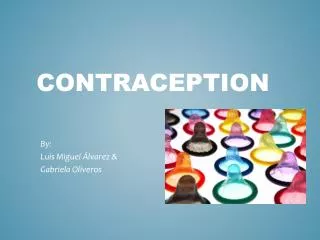
Condoms • Barrier • Only effective way to prevent STIs • 85% effective • Both male and female products • Easy access to products • Use once
Diaphragm • Barrier • 85% effective • Female inserts into vagina • Should add spermacide • Remove after 6 hours
Cervical Cap • Barrier • 85% effective • Female inserts into vagina • Fitted by doctor • Should use spermacide • Remove after 8 hours • Similar to Diaphragm
Sponge • Barrier • 85% effective • Female inserts into vagina • Contains spermacide • Easy to access product • Good for 24 hours
Spermacide • Chemical • 70% Effective • Woman sprays foam or gel into vagina • Traps and kills sperm • Use with other methods
Birth Control Pill • Chemical • **99% Effective • Female takes 1 pill/day • Uses hormones estrogen and progesterone to stop ovulation.
Depo – Provera • Chemical • 99% Effective • Shot of progesterone in the arm, thigh, or buttocks • Good for 3 months • Lunelle similar – good for 1 month
Norplant • Chemical • 99% Effective • Inserted under skin inside arm • Releases progesterone to stop ovulation • Good for 5 years • Must be surgically removed to become pregnant
Nuva Ring • Chemical • Ring inserted into vagina • Releases estrogen and progesterone to stop ovulation • Good for one month
IUD – Intrauterine Device • Chemical • 99% effective • T-shaped device inserted into uterus • Made of copper or plastic • Releases progesterone to stop ovulation • Changes uterine lining • Not recommended for woman with no children
Permanent Methods • Tubal Ligation – Fallopian Tubes cut and tied • Prevents eggs from reaching uterus • Vasectomy – Vas Deferens cut • Sperm cannot combine with Semen – makes travel difficult
Natural Methods • Rhythm – abstain from sex during ovulation • 75% • Woman must be committed and know body signs of fertility • Woman must have regular menstrual cycles • Withdrawal – penis is removed before ejaculation • 75% • takes control • some sperm may be released before ejaculation