Download
1 / 23
230 likes | 348 Views
This overview explores the cell cycle's role in cancer development, emphasizing the regulation of cell division and the impact of DNA mutations. Approximately 1 million new cancer cases are diagnosed each year in the U.S., making it the second leading cause of death. While survival rates are improving due to advancements in detection, diagnosis, and treatment, understanding the underlying mechanisms is essential. Key factors include the roles of cyclin proteins, tumor types, symptoms to watch for, and methods for prevention and treatment.

E N D
Regulating the Cell Cycle Biology
US Statistics • 1 million new cases each year • #2 cause of death • Survival rates are increasing: • Detection • Diagnosis • Treatment
Review: Why does a cell divide? • A large cell has: • Trouble transporting materials • Increasing demands on DNA
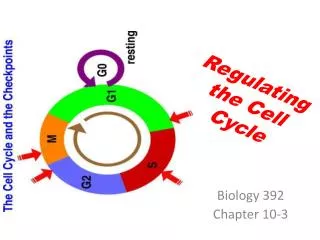
When does a normal cell divide? • A protein called cyclin responds to external and internal factors of a cell • Cyclin regulates the Cell Cycle
So what is cancer? • Process where growth and division goes wrong • New cells form incorrectly (mutations)
So what is a mutation? • A change in DNA sequence • ATTCG • ATCCG
Cancer begins • When mutations disrupt mitosis
Normal cells • Spend most of their time in interphase
Cancerous cells • Get stuck in mitosis (Short interphase) • Keep reproducing • Tumors form
Benign: Cells are normal but overgrown Malignant: Cells are abnormal and divide without control Invade and destroy surrounding tissue Break away and travel through the body (metastasis) Tumors (two types)
Where can a tumor occur? • Anywhere
Why is a Metastasis Dangerous? • Cancer that started out on your skin could spread to your lungs, brain, liver
So what causes mutations? • Environmental • Genetics • Biological
Symptoms • A thickening or lump in an area • Obvious change in a wart or mole • A sore that does not heal • Nagging cough/hoarseness • Changes in bowel/bladder habits • Ingestion/difficulty swallowing • Unexplained changes in weight • Unusual bleeding/discharge **Not all of these symptoms mean a person has cancer, they can have other causes
If you have cancer, who do you see? • Oncologist- Cancer Doctor • The oncologist will take a biopsy and send it to the lab for testing. • Biopsy- removal of some cells from a tumor to see if they are cancerous.
Treatment • Surgery • Chemotherapy • Radiation
Prevention • Avoid excessive sunlight