0 likes | 4 Views
Arterial blood gas (ABG) analysis remains one of the most critical diagnostic tools in acute and chronic care, offering real-time insights into a patient's respiratory efficiency, metabolic balance, and acid-base status.
E N D
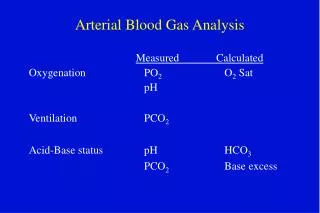
Arterial Blood Gas Machine Arterial blood gas (ABG) analysis remains one of the most critical diagnostic tools in acute and chronic care, offering real-time insights into a patient's respiratory efficiency, metabolic balance, and acid-base status. As a cornerstone in critical care, respiratory medicine, anesthesia, and emergency departments, ABG testing guides precise management of patients with complex physiological disturbances. 1. Purpose and Clinical Applications An ABG test measures key blood parameters: oxygen partial pressure (PaO₂), carbon dioxide partial pressure (PaCO₂), blood pH, and calculated bicarbonate (HCO₃⁻) and base excess. It may also report oxygen saturation (SaO₂), hemoglobin variants (e.g., carboxyhemoglobin, methemoglobin), electrolytes, lactate, glucose, and other metabolites. Common clinical applications include: ● Assessment of Respiratory Function: PaO₂ indicates oxygenation, while PaCO₂ reflects alveolar ventilation. Abnormal values help diagnose hypoxemia and respiratory failure. ● Acid‑Base Disorders: pH and PaCO₂ assess respiratory causes, whereas bicarbonate and base excess evaluate metabolic derangements (e.g., metabolic acidosis, metabolic alkalosis). ● Extreme Clinical Scenarios: Useful in acute respiratory distress syndrome (ARDS), sepsis, shock states, diabetic ketoacidosis, renal tubular acidosis, cardiac events, and toxicological emergencies. 2. Sampling and Analysis Workflow ABG sampling typically uses a syringe to draw arterial blood via radial, brachial, or femoral artery puncture. Key steps include: ● Patient Preparation: Conduct a circulation test (e.g., Allen test) to ensure adequate collateral perfusion; stopping supplemental oxygen may be required to assess baseline status. ● Collection Procedure: Use heparinized syringes to prevent clotting, avoid air bubbles, and analyze the sample promptly (within 15–30 minutes) to prevent gas diffusion errors . ● Transport Conditions: Depending on syringe type, samples may need ice packing (glass syringes) or can be analyzed at room temperature with plastic syringes.
3. Analyzer Technology Modern ABG analyzers have evolved significantly, now ranging from benchtop to point-of-care formats. They incorporate: ● Electrodes for pH, PaO₂, PaCO₂: Clark and Severinghaus-style electrodes accurately measure gas tensions. ● Integrated Analytical Panels: Higher-end models assess hemoglobin derivatives, electrolytes, lactate, and glucose alongside gas parameters. ● Wet vs. Dry Systems: Wet analyzers offer low-cost per test but require reagent upkeep. Dry-card analyzers offer portability and minimal maintenance, ideal for decentralised testing. ● Speed & Accuracy: Results are typically available within 5–15 minutes—crucial in critical settings like ICU or OR . 4. Interpretation Framework ABG interpretation follows a structured algorithm: 1. Evaluate Oxygenation via PaO₂ and SaO₂ relative to FiO₂. 2. Analyze pH: pH below 7.35 indicates acidosis; above 7.45 indicates alkalosis. 3. Assess Respiratory Component using PaCO₂—high values indicate respiratory acidosis; low values indicate respiratory alkalosis. 4. Assess Metabolic Component using bicarbonate/base excess—solving for metabolic acidosis or alkalosis. 5. Determine Compensation: determine whether physiological systems are compensating correctly. 6. Contextualize Findings, integrating clinical data and calculating indices like the alveolar–arterial gradient for ventilation-perfusion mismatch. 5. Point‑of‑Care Integration and Quality Control Advancements in ABG testing emphasize: ● Point-of-Care Testing (POCT): Enables bedside or lab-adjacent testing, accelerating diagnosis and therapeutic response. ● Interface with Clinical Systems: Electronic Health Record integration and automated quality controls streamline operations and reduce human error. ● Pre-Analytical Accuracy: Errors due to sampling technique are common; compliance with clinical guidelines prevents incorrect readings.