The Compromise of 1850: A Temporary Solution to Slavery Issues in America
The Compromise of 1850 arose as a result of California's population boom during the Gold Rush. It sought to admit California as a free state while allowing territories of Utah and New Mexico to decide on slavery. Key provisions included the abolition of the slave trade in Washington D.C. and stricter fugitive slave laws. Despite its intentions, the compromise merely postponed conflict, rendering previous agreements like the Missouri Compromise irrelevant. The subsequent Kansas-Nebraska Act of 1854 capitalized on popular sovereignty, further deepening national divides.

The Compromise of 1850: A Temporary Solution to Slavery Issues in America
E N D
Presentation Transcript
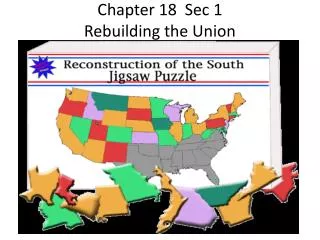
Chapter 18 sec 1 Compromise of 1850 • As a result of the Gold rush California's population exploded and decided to apply for statehood. • California wanted in as a free state, but the US Congress had other ideas such as 2 California’s
Chapter 18 sec 1 • The compromise was agreed with 4 provisions • California was a free state • Territories of Utah and N. Mexico had no restrictions on slavery • Slave trade abolished in DC • Congress had stricter fugitive slave laws. • The Compromise did nothing but buy time. It was like putting a band-aid on cut off arm. Also with no restrictions on slavery in the two new territories the Compromise of 1820 became null and void.
Chapter 18 sec 1 Kansas-Nebraska, Bleeding Kansas and Dred Scot Kansas-Nebraska Act • Kansas Nebraska Act was the idea of Illinois senator Stephen Douglas. He wanted the new Transcontinental RR to go through Chicago. • Used the idea of popular sovereignty in the two new territories to settle the issue over slavery (the people would decide) • Strongly supported by Southerners, Northerners were divided and in 1854 created the Republican Party to oppose KNA supporters.