Understanding Clauses and Characterization in Writing and Literature
280 likes | 407 Views
Dive into the essential concepts of writing and literary analysis with this comprehensive overview of clauses and characterization. Learn the differences between independent and dependent clauses, as well as adverbial clauses. Discover various characterization techniques, including direct and indirect characterization, and explore points of view such as first-person and third-person. Define key terms like subordinating conjunctions, genre, and drafting. Enhance your writing skills and understanding of narrative by mastering these foundational elements.


Understanding Clauses and Characterization in Writing and Literature
E N D
Presentation Transcript
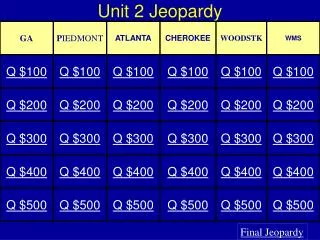
Unit 2 Test jEOPARDY Clause, Characterization, Rules of the Game, Analogies, Similes, Point of View, Lesson 8-7 Vocabulary
PICK A CATEGORY 500 400 300 200 100 Nym Independent clause Editing/ Publishing 3rd Person Omniscient Simile Ris Dependent Clause Character Traits 1st Person POV Analogy Plac Subordinating Conjunction Indirect Characterization 3rd Person Limited Mei Mei Corp Parts of a Clause Direct Characterization Prewriting Audience Vect Adverbial Clause Central Character Drafting Lau Po Genre
Define Independent clause • Expresses a complete thought and can stand alone as a sentence
Does not express a complete sentence. Define Dependent clause • Does not express a complete sentence.
Define Adverbial clause • This clause usually tells where, why, how, when or to what degree something was done. • A dependent clause that modifies a verb, an adjective or an adverb.
What are some examples of Subordinating conjunction • Word(s) such as: After, As, Before, Because, Since, Until, When, Whenever, Although, Where, Wherever, While, Unless, etc.
What are the two main Parts of a clause? • A group of words that contain a subject and a verb.
Who is Lau po? • He was an old man who encouraged Mei Mei to participate in chess tournaments.
Which character in rules of the game is Dedicated? • Mei Mei’s dedication to chess was apparent in the extensive amount of time she spent practicing and studying the game.
List general Character traits • Describing the person’s physical appearance (ie. brown eyes) • Describing expressions of character’s personality (ie. shy) • Presenting the person’s own thoughts, speech, and actions • Revealing other people’s reactions to the person • Directly commenting on the person
What is INDIRECT CHARACTERIZATION? • Reader must infer traits from a character’s words, actions, thoughts, appearance and relationships.
Define Central character • Plot and central conflict of the story generally revolve around this person
What is an ANALOGY? • A relationship between pairs of words.
define1ST PERSON POINT OF VIEW • The narrator uses pronouns such as I and me. He does not know the thoughts and feelings of other characters.
What is the definition of the Stem: vect • Means carry
What is genre? • Which format will best suit my purpose and audience? • essay, speech, letter, research paper, poem, short story, review, journal entry, script, web site, power presentation
What is Editing and publishing? • The point in the writing process where the author looks for ways to clarify ideas, style and the structure of their writing
Who is an audience? • Who are my readers? • classmates, teachers, friends, community members, a customer service at a company, web users
Define drafting • The stage in the writing process where you transfer prewriting into a rough draft
Define Prewriting/planning • The beginning stage of the writing process.
What is the definition of the Stem: ris • Means laugh
What is the definition of the Stem: plac • Means calm, peace
What is the definition of the Stem: nym • Means name
What is the definition of the Stem: corp • Means body
Define 3RD PERSON OMNISCIENTPOINT OF VIEW • The narrator is not a character in the story but an outside observer. He is all-knowing meaning he has access to the thoughts and feelings of all characters.
Define 3RD PERSON LIMITED POINT OF VIEW • The narrator is not a character in the story but an outside observer. He zooms in on the thoughts, feelings and opinions of one character.
What is the definition of a SIMILE? • A comparison using like or as.
What is the definition of Direct cHARACTERIZATION? • Writer directly states a character’s traits.