THE GENETIC MATERIAL
1.07k likes | 1.11k Views
Explore the fundamentals of DNA and RNA, including nucleotides, nitrogenous bases, base-pairing rules, and the structure of DNA's double helix. Learn about DNA's role as the genetic material, its composition, and the basics of DNA technology and identification methods.


THE GENETIC MATERIAL
E N D
Presentation Transcript
DNA & RNA THE GENETIC MATERIAL
Vocabulary you should know… • DNA: (deoxyribonucleic acid) the material that contains the information that determines inherited characteristics • Nucleotide: in a nucleic-acid chain, a sub-unit that consists of a sugar, a phosphate, & a nitrogenous base
More Vocab… • Nitrogenous base: an organic base that contains nitrogen, such as a purine or pyrimidine; a sub-unit of a nucleotide in DNA or RNA • Purine: a nitrogenous base that has a double-ring structure; one of two general categories of nitrogenous bases found in DNA & RNA; either adenine or guanine
More Vocab… • Pyrimidine:a nitrogenous base that has a single-ring structure; one of the two general categories of nitrogenous bases found in DNA& RNA; thymine, cytosine or uracil • Base-Pairing Rules: the rules stating that cytosine pairs w/ guanine & adenine pairs w/ thymine in DNA & adenine pairs w/ uracil in RNA
More Vocab… • Complementary Base Pair: the nucleotide bases in one strand of DNA or RNA that are paired w/ those of another strand; adenine pairs w/ thymine or uracil, and guanine pairs with cytosine • Base Sequence: the order of nitrogenous bases on a chain of DNA • Double Helix: shape of a DNA molecule formed when two twisted DNA strands are coiled into a springlike structure & held together by hydrogen bonds b/t the bases
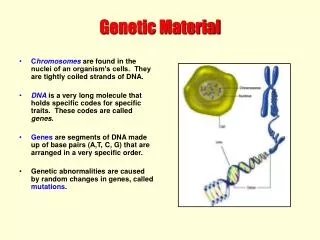
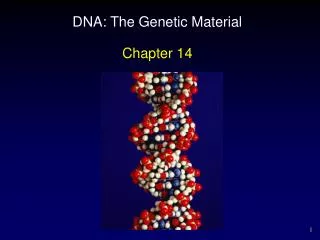
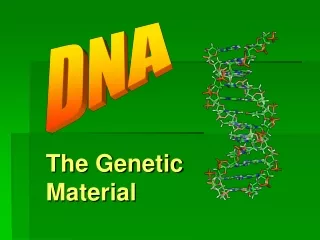
DNA – deoxyribonucleic acid • The genetic information for an organism • DNA contains the instructions that cells need to make every protein required for essential life functions • Found mostly in the nucleus of cells • Composed of 100’s of 1000’s of repeating units of nucleotides
DNA • Photographed through x-ray crystallography by Rosalind Franklin in the 1950s (w/ help from Maurice Wilkins) • 1st model was created by James Watson & Francis Crick in the ‘50s, with the use of Franklins x-ray crystallography picture
Made of subunits called nucleotides: 1 phosphate group 1 deoxyribose – simple sugar **this is what DNA is named for 1 of 4 nitrogen bases Either purines or pyrimidines DNA
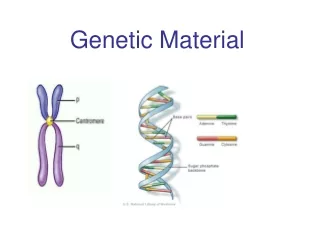
NITROGEN BASES • Purines: double ringed structure • Adenine (A) • Guanine (G)
Nitrogenous Bases • Pyrimidines: single ringed structure • Thymine (T) • Cytosine (C)
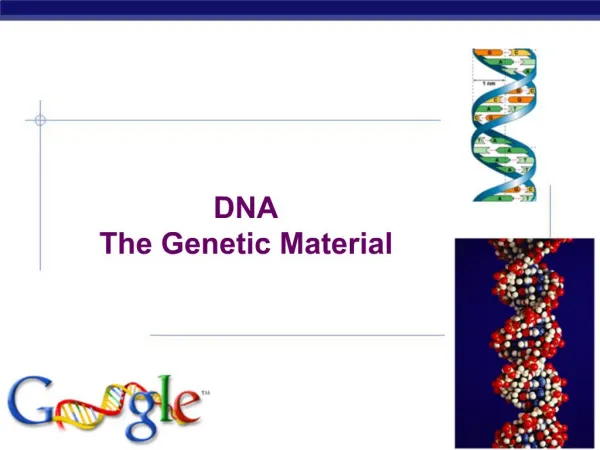
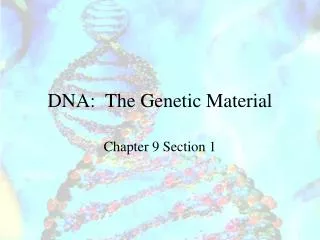
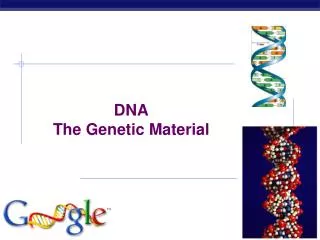
STRUCTURE OF DNA • Shape: double helix – repeating units of nucleotides **the sequence of nucleotides determines gene function
DOUBLE HELIX • 2 chains of nucleotide monomers running anti - parallel • Phosphate groups make up the backbone of the double helix • Covalent bonds hold the nucleotides together by connecting the deoxyribose of one nucleotide to the phosphate group of the adjacent nucleotide
Double Helix Cont’d • The nitrogen bases of the nucleotides pair up to link the 2 helixes • hydrogen bonds b/t the nitrogen bases hold the strands of the double helix together
Base-Pairing Rules • Adenine (A) & Thymine (T) are always together • Cytosine (C) & Guanine (G) must then pair together
DNA Basics Quiz • What is DNA? • The first person to photograph DNA was ____________. • The first people to make a model of DNA were ________ & ______. • A strand of DNA is made up of repeating units of __________.
DNA Basics Quiz Cont’d • A nucleotide is composed of 3 parts, name all three. • List the 4 different nitrogenous bases. • Which part of the nucleotide makes up the backbone of the strand of DNA?
DNA Basics Quiz Cont’d • What type of bonds hold the deoxyribose of one nucleotide to the phospate of the adjacent one? • What type of bonds hold the complementary nitrogenous bases together? • Out of Adenine, Guanine, Cytosine & Thymine, tell me the two complementary pairs.
DNA Technology • DNA is manipulated for many different reasons: • Crime scene analysis • Genetic counseling • Research • Treatment of disease
DNA Technology • DNA ID • Only identical twins have identical DNA • Only 10% of the human genome varies between all humans • The 10% that differs falls on the same chromosome region so we can isolate this DNA and use it to make important discoveries
Identifying DNA • Step 1: Copying DNA: Polymerase Chain Reaction • Method of quickly copying DNA from small samples • Step 2: Cutting DNA: Restriction Enzymes • Restriction enzymes recognize specific short DNA sequences & cut in or near them • This isolates the DNA needed for ID
Identifying DNA cont’d • Step 3: Sorting DNA by Size: Gel Electrophoresis • Gel electrophoresis separates DNA according to size and charge • Does this by running an electrical current through gel that the DNA cut by the restriction enzymes has been placed in, + & - charged pieces move to opposite ends • The resulting pattern is called the DNA fingerprint
Identifying DNA • Step 4: Comparing DNA: DNA Fingerprints • Compare the DNA sample to other DNA fingerprints until you find a match, or pattern that you are looking for • Accuracy?? • The odds that 2 people will share the same DNA fingerprint: 1: 100 billion • # of people on Earth: approx 7 billion
Recombinant DNA • Genetic engineering: the process of altering the genetic material of cells or organisms to allow them to make new substances • DNA recombination/Recombinant DNA: • Joining together DNA from two different organisms
DNA Recombination • Step 1: isolate the DNA and the plasmid of interest • Plasmids: small rings of DNA found naturally in some bacterial cells in addition to the main bacterial chromosome • Step 2: restriction enzymes cut the DNA into fragments • Step 3: fragments and plasmid DNA are joined together permanently by DNA ligase
DNA Recombination Cont’d • Step 4: recombinant DNA plasmids, each with different fragments of DNA, are inserted into bacterial cells • These recombinant DNA plasmids are then copied each time the bacterial cell copies its own DNA • Step 5: once a colony of bacterial cells containing the recombinant DNA plasmids is created, the recombinant DNA is removed to be used
Central Dogma of Molecular Genetics • How we go from DNA to RNA • 1. replication (DNA copies itself) • 2. transcription (DNA acts as a template for the production of messenger RNA (mRNA)) • 3. translation(mRNA carries coded information to ribosomes; ribosomes "read" this information and use it to make proteins)
Replication: Vocab you should know… • DNA replication: process by which DNA is copied in a cell before a cell divides by mitosis, meiosis or binary fission • Helicase: enzymes that separate DNA strands by breaking the hydrogen bonds that hold the nitrogenous bases together
Replication: More vocab… • Replication Fork: a Y shaped point that results when the two strands of DNA double helix separate so that the DNA molecule can be replicated • DNA Polymerase: an enzyme that catalyzes the formation of the DNA molecule
Replication: More Vocab… • Semi-conservative Replicaiton: in each new DNA double helix, one strand is from the original molecule & one strand is new • Mutation: a change in the nucleotide-base sequence of a gene or DNA molecule
Facts about Replication • Occurs during interphase of both the cell cycle for mitosis and for meiosis • Happens to all of the DNA in the cell, not just selected parts (every chromosome)
Replication (of DNA) • Strands of DNA separate • Helicase enzymes move along the strand of DNA • They break the hydrogen bonds between the nitrogen bases • The two strands separate, exposing a a Y-shaped region called the replication fork
Replication Cont’d • DNA polymerase enzymes add complementary nucleotides to the two separated strands • The nucleotides are found free-floating around inside the nucleus • As the nucleotides are added, covalent bonds form b/t the deoxyribose of one and the phosphate of the next
Replication: Adding Nucleotides Cont’d • Adding nucleotides cont’d • Hydrogen bonds are formed b/t the nitrogenous bases from the original strand and the nitrogenous bases on the newly added nucleotides
Replication: Adding Nucleotides Cont’d • Adding Nucleotides cont’d • DNA synthesis (creation) occurs in different directions on each strand • As the replication fork moves along the original DNA, synthesis of one strand, the leading strand, follows the movement of the replication fork • Synthesis of the other strand, the lagging strand, moves in the opposite direction, away from the replication fork
Replication: Adding Nucleotide Cont’d • Adding Nucleotides Cont’d • Because the nucleotides are added to the leading and lagging strands in opposite directions, it leaves gaps in the newly synthesized DNA, called Okazaki Gaps • These gaps are later joined together by the enzyme DNA ligase
Replication Cont’d • DNA polymerase enzymes finish replicating the DNA & fall off The result of replication of a strand of DNA is two completely identical strands of DNA, each containing one old strand & one new stand = semiconservative replication
Replication cont’d • DNA replication flash interactive