Download
1 / 20
200 likes | 317 Views
This comprehensive guide explores the fundamentals of refrigeration, emphasizing the role of heat exchange and BTU calculations in designing effective cooling systems, particularly for breweries. It covers essential components, typical refrigeration cycles, and practical examples, such as a two-pump glycol system that optimizes cooling efficiency. Gain insights into load calculations and the importance of velocity, turbulence, and contact in heat exchange. Whether you're a professional in the field or an enthusiast, this resource serves as a valuable reference for practical refrigeration applications.

E N D
1. Jim VanderGiessen Jr.
Pro Refrigeration Inc.
2. REFRIGERATION
3. BTU’s & TONS Based on Properties of Water, mechanical was a replacement for ice harvesting
Based on Properties of Water, mechanical was a replacement for ice harvesting
4. CAPACITY
5. Basic Refrigeration Components
6. HEAT EXCHANGE Its all about Heat Exchange. Keys to HX are velocity, turbulence, contact. Its all about Heat Exchange. Keys to HX are velocity, turbulence, contact.
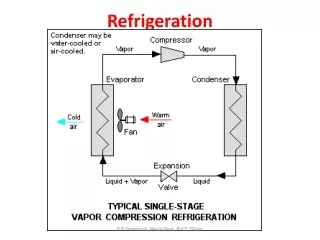
7. Typical Refrigeration System Cycle Heat flows downhill- evap and condenserHeat flows downhill- evap and condenser
8. The Brewery Chiller System Practical TXV example- paint can, compressed air, etc.Practical TXV example- paint can, compressed air, etc.
9. The Brewery Chiller System 2 pump system, coldest glycol out to brewery, warmest glycol to chiller evaporator.2 pump system, coldest glycol out to brewery, warmest glycol to chiller evaporator.
10. Brewery Cooling Load
11. Brewery Cooling Loads
15. Questions about the Load Calculations?