Download
1 / 20
200 likes | 379 Views
Dive into the fascinating kingdom of Protista, home to the most diverse eukaryotic organisms! This exploration covers the foundational vocabulary differentiating prokaryotic and eukaryotic life, including key characteristics and reproductive methods of protists. Learn about the three main categories of protists: plant-like, animal-like, and fungus-like, alongside their nutritional strategies and environmental adaptability. Discover the seven major phyla, from euglenophytes to sporozoa, and grasp their significance in ecosystems and human health. Engage with this vibrant world of unicellular life!

E N D
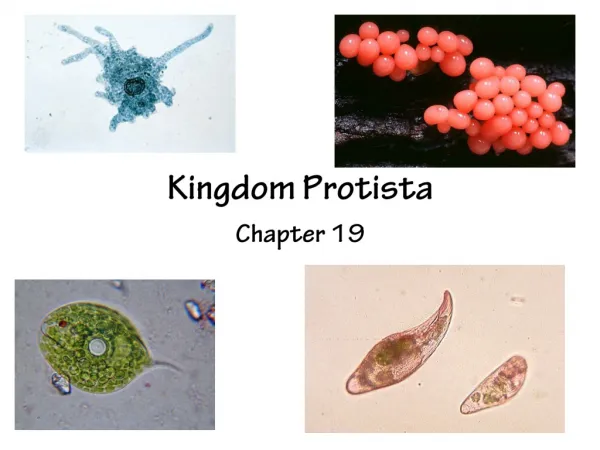
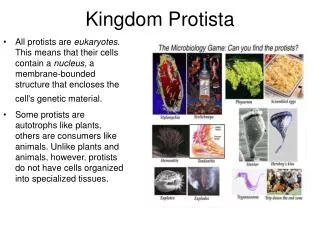
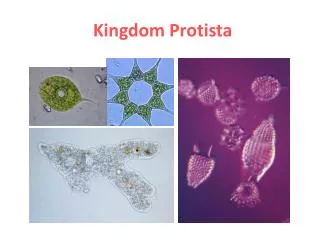
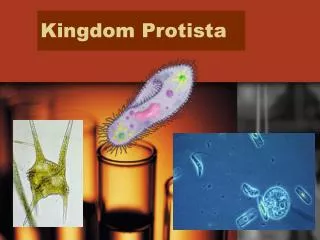
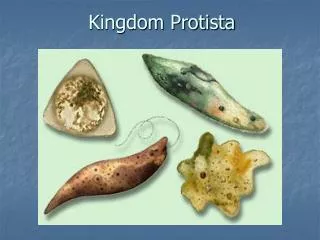
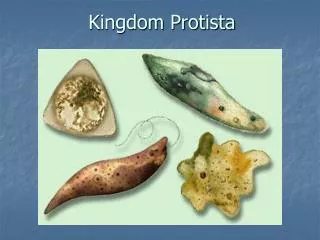
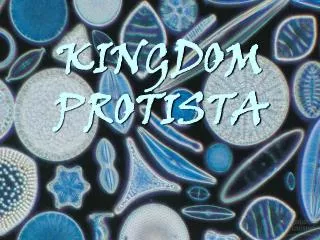
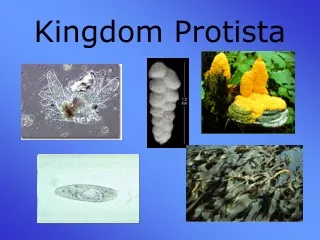
Kingdom Protista The most diverse eukaryotes…
Some vocab before we start… Prokaryotic Eukaryotic
Some vocab before we start… Prokaryotic Eukaryotic • Pro = before • Karyo= nucleus • Lack a nucleus • Does not have membrane bound organelles • Eg. Monerans - bacteria • Eu = good/true • Karyo = nucleus • Has a nucleus • Has membrane bound organelles • Eg. Plant and animal cells
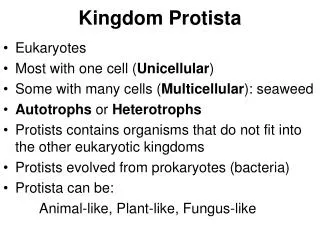
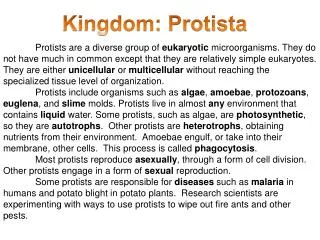
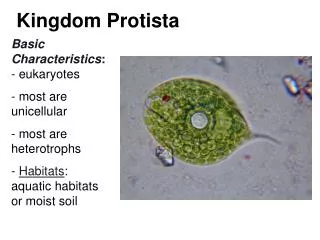
Unifying Characteristics • Eukaryotic • Most are unicellular and microscopic(some are colonial) • Most reproduce asexually (binary fission) • Lives in almost any environment that contains water • Move in a variety of ways • Obtain food in a variety of ways
The 7 Major Phyla As they are presented in our textbooks…
Plant-like Protists • contain chlorophylland carry out photosynthesis • commonly called algae • four phyla: euglenophytes, chrysophytes, diatoms, dinoflagellates • accessory pigments help absorb light, give algae a variety of colors
Phylum Euglenophyta • Eugleno = good eye / Phyta = plant • Single cells • One or more flagella • No cell walls • Elastic layer called the pellicle • Has chloroplast • Autotrophic (photosynthesis) but becomes heterotropic in the absence of light • E.g. – Euglena (euglenoid flagellates)
Phylum Chrysophyta • Chrys = gold / Phyta= plant • Single cells or grouped (colonies) • Motile and free floating • Cell walls (often with silica) • Chlorophyll and yellow pigment in plastids • Food stored as oil or complex carbohydrates E.g. golden algae and diatoms
Flagella 3 µm Phylum Pyrrophyta • Pyrro = fire / phyta = plant • Single cells with 2 flagella • Thick cell wall • Chlorophyll and other pigments in plastids • Food stored in starch or oil • Causes “red tide” E.g. - dinoflagellates
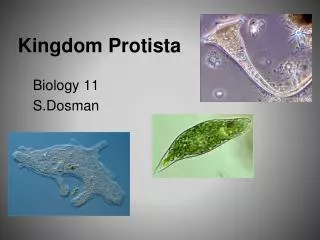
Animal-like Protists (PROTOZOA) • No cell wall • Heterotrophic(free living or parasitic) • Classified according to means of locomotioninto 4 phyla
Phylum Sarcodina • Sarco = flesh • Locomotion by protoplasmic extensions called pseudopodia • Many with shells • Reproduces by fission • Can become cysts when in harsh conditions • E.g. amoeba, foraminifera
Phylum Ciliophora • Cilio = eyelash / phora= bearing • Locomotion by beating of cilia • Cilia also help in feeding • Has a macronucleus and micronucleus • Reproduces by binary fission or conjugation • E.g. paramecium, vorticella, and stentor
Phylum Sporozoa • Sporo = seed / Zoa= animal • Lack locomotive structures • Lack contractile vacuoles • Mostly parasitic • Have sexual and asexual life cycle stages and may infect multiple hosts e.g. plasmodium (malaria)
9 m Phylum Mastigophora • Mastigo = whip / phora= bearing • Locomotion by flagella • Absence of chlorophyll • Parasitic and saprophytic • E.g. trypanosoma (sleeping sickness)
Homework • Read front page of coloring sheet “Introduction to Protozoans” and color protozoans on back side. • Memorize names of 7 Phyla in Protista and know the literal translation of their phylum name. Entry Slip next class on reading content AND phylum names. REMINDER: DISEASE PROJECTS DUE NEXT CLASS!!!`