Download
1 / 5
50 likes | 183 Views
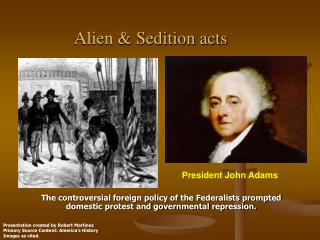
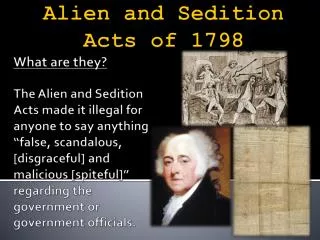
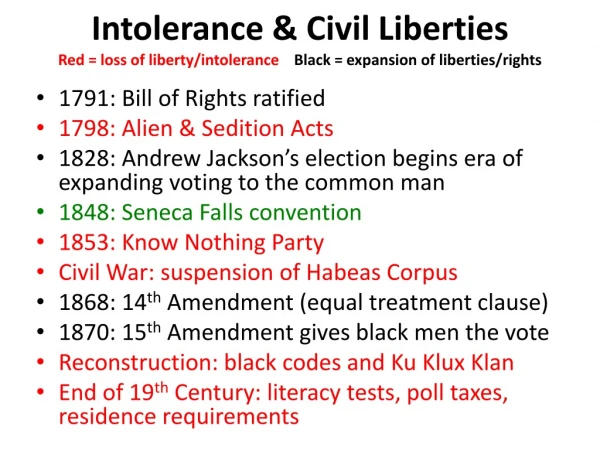
The Alien and Sedition Acts, passed by John Adams during the threat of war with France, aimed to suppress political dissent from the Republican opposition led by Thomas Jefferson. The laws made it a high misdemeanor to conspire against government measures, provoking significant public backlash. Many questioned their constitutionality, contributing to Jefferson's election in 1800. Once in power, Jefferson pardoned those convicted under the Sedition Act, highlighting the tensions between the two political factions and the struggle for civil liberties.

E N D
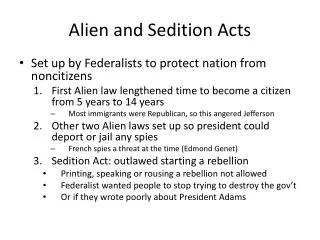
Text from Document • “If any persons shall unlawfully combine or conspire together, with intent to oppose any measure or measures of the government of the United States,… he or they shall be deemed guilty of a high misdemeanor.”
Main Idea • Due to threat of war with France, John Adams passed 4 laws collectively known as the Alien and Sedition Acts to quell political opposition from Republicans, led by Thomas Jefferson.
Inferences • Many Americans questioned the constitutionality of these laws. • Public opposition to the Alien and Sedition Acts was so great that they were in part responsible for the election of Thomas Jefferson, a Republican, to the presidency in 1800. • Once in office, Jefferson pardoned all those convicted under the Sedition Act, while Congress restored all fines paid with interest.
Point of View of Bias • Jefferson and Adams were bitter enemies and Adams, who approved the amendment, wanted to destroy Thomas Jefferson's Republican Party which supported the French Revolutionaries.