Understanding Poverty’s Impact on Education: Insights from Eric Jensen
10 likes | 136 Views
In "Teaching with Poverty in Mind," educator Eric Jensen explores the profound effects of poverty on children’s cognitive and emotional development. He highlights how chronic poverty adversely alters brain function, but also emphasizes the brain's remarkable capacity for adaptation. Through case studies, Jensen offers schools actionable strategies to foster resilience, self-esteem, and academic success in economically disadvantaged students. This essential read is a guide for educators seeking to create nurturing learning environments that combat the negative impacts of poverty.


Understanding Poverty’s Impact on Education: Insights from Eric Jensen
E N D
Presentation Transcript
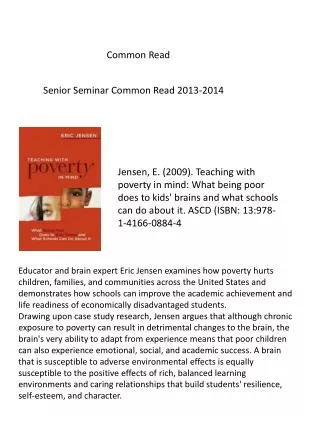
Common Read Senior Seminar Common Read 2013-2014 Jensen, E. (2009). Teaching with poverty in mind: What being poor does to kids' brains and what schools can do about it. ASCD (ISBN: 13:978-1-4166-0884-4 Educator and brain expert Eric Jensen examines how poverty hurts children, families, and communities across the United States and demonstrates how schools can improve the academic achievement and life readiness of economically disadvantaged students. Drawing upon case study research, Jensen argues that although chronic exposure to poverty can result in detrimental changes to the brain, the brain's very ability to adapt from experience means that poor children can also experience emotional, social, and academic success. A brain that is susceptible to adverse environmental effects is equally susceptible to the positive effects of rich, balanced learning environments and caring relationships that build students' resilience, self-esteem, and character.