Enhancing Learning Through the Flipped Classroom Approach: Effectiveness and Insights
This article explores the effectiveness of the flipped classroom model in enhancing student engagement and performance. Research highlights the benefits of active learning strategies, wherein students interact with course materials outside of class, allowing for higher-order thinking during in-class time. Key findings suggest that this method results in an effect size of approximately 0.5 on student performance in STEM subjects. With adaptive learning techniques and Universal Design for Learning (UDL), the flipped classroom can meet diverse learning needs and foster improved educational outcomes.


Enhancing Learning Through the Flipped Classroom Approach: Effectiveness and Insights
E N D
Presentation Transcript
Autar Kaw http://AutarKaw.com University of South Florida Renee Clark University of Pittsburgh How Effective is the Flipped Classroom? Course Hero Summit, July 2019
Attention vs. Time elapsed Source: Brain Rules by John Medina http://brainrules.blogspot.com
Resetting the Attention Source: What to do when you’re losing your audience by Olivia Mitchell
Active Learning Student performance on examinations and concept inventories under active learning, effect size≈0.5 Trivial ≈0 | Small =0.2 | Medium =0.5 | Large =0.8 Source: Active learning increases student performance in science, engineering, and mathematics by Freeman, et. al., 2014
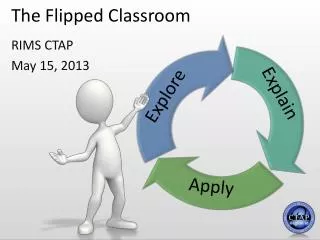
Flipped Learning Source: University of Texas at Austin Flipped Classroom https://facultyinnovate.utexas.edu/flipped-classroom
Why teach the flipped class? • Interact with lecture videos and textbook on own. Schedule yourself and watch several times. • Class time can be used for higher level thinking skills. • Student engagement and motivation increase due to accountability and interactions.
Flipped vs Blended (effect size) Source: Evaluating Blended and Flipped Instruction in Numerical Methods at Multiple Engineering Schools by Clark, Kaw, Lou, Scott, Besterfield-Sacre, International Journal for the Scholarship of Teaching and Learning: Vol. 12: No. 1, Article 11, 2018.
Expected Course Outcomes • Cognitive: “What will students completing this course know?” • Behavioral: “What will students completing this course be able to do?” • Affective: “What will students completing this course care about or think?” Source: http://tillamookbaycc.edu/wp-content/uploads/2017/03/HowToWriteCourseLearningOutcomesforYourSyllabus.pdf
Effect Size For Final Exam (Higher Order) We are comparing three modalities Blended class Flipped class Flipped class with adaptive pre-class learning
Ten Common Learning Techniques • Elaborative interrogation • Self-explanation • Summarization • Highlighting/underlining • Keyword mnemonic • Imagery for text • Rereading • Practice testing • Distributed practice • Interleaved practice Moderate Moderate Low Low Low Low Low High High Moderate Source: Improving Students’ Learning with Effective Learning Techniques, Psychological Science in the Public Interest, Vol. 14, 2013
Practice Testing Effect size =0.74
Distributed Practice Effect size=0.46 Source: http://blog.learningelevated.com/archives/62
The Trinity of UDL 1. Multiple means of representation What – Recognition network Source: National Center on Universal Design for Learning
The Trinity of UDL 2. Multiple means of action and expression How – Strategic Network Source: National Center on Universal Design for Learning
The Trinity of UDL 3. Multiple means of engagement Why – Affective Network Source: National Center on Universal Design for Learning
How Effective is the Flipped Classroom? QUESTIONS? Autar Kaw http://AutarKaw.com @numericalguy University of South Florida