Download

1 / 9
130 likes | 296 Views
This guide covers essential respiratory volumes and capacities crucial to understanding lung function. It details Tidal Volume (TV) during normal breathing, Inspiratory Reserve Volume (IRV) for deep inhalation, Expiratory Reserve Volume (ERV) for forceful exhalation, and Residual Volume, which remains in the lungs for continuous gas exchange. Vital Capacity combines TV, IRV, and ERV, while Dead Space Volume includes air that doesn't reach alveoli. Factors affecting respiratory rates include physical activities, emotional states, and chemical signals in the body.

E N D
Respiratory Volumes and Capacities Page 414 - 415
Factors • Size • Gender • Age • Physical condition
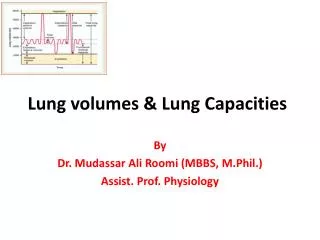
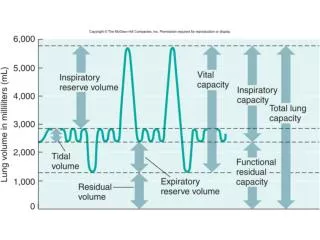
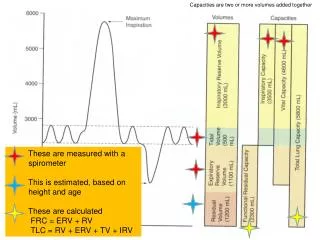
Tidal Volume (TV) • Normal quiet breathing • About 500 mL
Inspiratory Reserve Volume (IRV) • Amount of air that can be taken in forcibly over the tidal volume • 2100 ml – 3200 ml
Expiratory Reserve Volume (ERV) • Amount of air that can be forcibly exhaled after a tidal expiration • About 1200 ml
Residual Volume • Air that cannot be expelled from lungs • Allows gas exchange to occur continuously between breaths • About 1200 ml
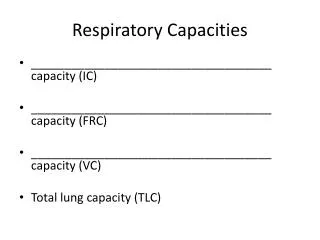
Vital Capacity • Total amount of exchangeable air • TV + IRV + ERV
Dead Space Volume • Air that does not reach alveoli • Remains in conducting zone • About 350 ml
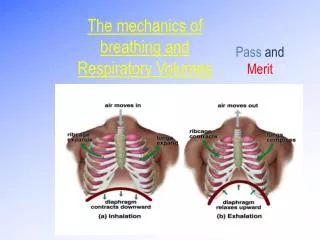
Factors Influencing Respiratory Rates and Depth • Physical Factors • Talking; coughing; exercise • Volition (conscious control) • Holding breath • Emotional Factors • Startled; fear; excitement • Chemical Factors • Levels of oxygen and carbon dioxide