Poor Eating H abits
440 likes | 590 Views
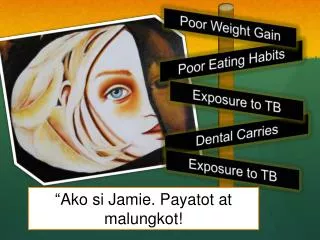
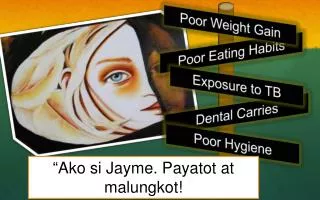
Poor Weight Gain. Poor Eating H abits. Exposure to TB. Dental Carries. Poor Hygiene. “ Ako si Jayme. Payatot at malungkot !. Ahaa , ito pala si Jayme ang batang payatot !. Severely Stunted. 92 cm. Severely Underweight. Normal BMI. 12 kg. BMI = 14.2. Pale Conjunctivae.


Poor Eating H abits
E N D
Presentation Transcript
Poor Weight Gain Poor Eating Habits Exposure to TB Dental Carries Poor Hygiene “Akosi Jayme. Payatot at malungkot!
Severely Stunted 92 cm Severely Underweight Normal BMI 12 kg BMI = 14.2
Pale Conjunctivae Impacted Cerumen Cervicolymphadenopathy Dental Carries
Past Medical History URTI; Acute gastroenteritis No previous hospitalizations No maintenance medications No allergies to food and medications
Birth and Maternal History • Born full term via NSD to a 21 y/o G1P1 • Attended by the hilot; born in the house • BW: ~ 3 kg • Denies any perinatal or neonatal complications • One prenatal check-up in the health center
Nutritional History Breastfed until 2 years old Weaned at the age of 6 (Cerelac and lugaw) Food preferences: junkfoods, noodles, candies and chocolates
Nutritional History 24 hour diet recall
IMMUNIZATION HISTORY BCG: 1 dose DPT/OPV: 2 doses Hepa B: 3 doses Measles: 1 dose Influenza virus: 1 dose
Family History • MATERNAL • Sister of grandmother: Hypertension and Diabetes • Cousin of mother: Hypertension and DM • Second cousin: Primary Complex (treated for 3 months; lost to follow-up) • Grandmother: died of hemorrhagic shock secondary to child bearing • PATERNAL • Uncle: Hepatitis
PERSONAL-SOCIAL HISTORY • Patient lives in a shanty house near the riverside in Ilugin. • 5 household members • Father is an elementary graduate • Primary breadwinner (works as plywood delivery assistant) • Mother finished until second year high school • Uncle: works in the soap making factory
PERSONAL-SOCIAL HISTORY • Environment • Water source: boiled tap water • Garbage collected everyday • Has their own restroom • Near the river • Exposure to internal pollution • Cooks inside the home using coal • Father and Uncle smokes inside the house
Malnutrition • Identify other medical causes of malnutrition (including TB, parasitism, dental caries, etc.) • Changing eating behaviour • Educate the child and the whole family regarding healthy eating habits • Discourage giving money as a reward • Discourage buying food from outside • Encourage variation in food choices
Malnutrition • Changing eating behavior • Find cheap and healthy alternatives • Teach meal planning and budgeting • Teach creative cooking. • Make eating time a pleasurable activity (e.g. good food presentation, incorporate games, encourage eating together, etc.) • Awareness of importance of growth and development monitoring
Malnutrition • Encourage involvement in government or non government programs to address malnutrition • Religiously attending the feeding program set by the community center
Exposure to TB • Screening for TB for all relatives and possibly neighbors too • Encourage and emphasize compliance with treatment • Educate the family regarding truths about TB, how it’s spread, its treatment and its complications • Educate family about importance of BCG vaccine
Dental Caries • Dental Caries • Referral to Dentist • Decrease intake of sugar-rich foods • Teach proper dental hygiene (including proper toothbrushing)
Poor Hygiene • Educate the family regarding good hygiene • Promote handwashing and sanitation to prevent spread of diseases • Educate family how to sterilized and store of their drinking water
Hazardous Environment • Advise alternative cooking methods • Use of mosquito nets • Main goal: Encourage them to transfer to a safer and conducive place to live
Health Misconceptions • Addressing other social Issues • Health misconceptions • Educate • Create programs teaching all families regarding truths on health (including pulongs on health, health counseling, focus group discussions, etc.)
Parenting Issues • Family issues • Establish a unified parenting style • Call for a family meeting or dialogue with the parents • Encourage good communication between partners and children • Advice good parenting styles
Transtheoretical Model of ChangebyProchaska& DiClemente, 1983.
Pre-Contemplation • Increasing awareness • Does the family recognize the need for a change? • Educate the family on the importance of a healthy lifestyle and diet • Do they understand the consequences of unhealthy eating habits and opposing parenting styles? • Teach them about the short term and long term effects of being unhealthy • Do they see the benefits of living a healthy lifestyle? • ‘Quiz’ them on their learnings
Contemplation • Re-affirm the family’s decision to make changes • Praise the family’s decision to commit to change • State, once again, the benefits that they will gain from it • Assure that you support their decision
Preparation • Target and build specific knowledge and specific skills • Make a list of objectives • Set achievable goals for the family • Start with small, realistic goals that are easy to attain
Seed 3: Communicate • Listen. Be open. Check for understanding. • To your partner • To your child • Try to understand where the other person is coming from. • Explain. Respond openly and honestly.
Action • Child • Start slowly but surely • Introduce vegetable and fruits one at a time • Encourage but not coerce • Use of coercive control tactics to counter children’s resistance during mealtimes resulted to problematic eaters (Sanders, et. al., 1993)
Action • Child • Set simple cognitive rules • Vague instruction giving was particularly likely to be associated with increased food refusal and decreased chewing (Sanders et. al, 1993) • “When, then” rule
Action • Parents • Establish a unified parenting style • Authoritative parenting style • Communicate with one another • Set an example to children
Maintenance • Are they aware of the change they have achieved? • Are they aware of the things that they may tempt them to revert in their old behavior?
Maintenance • Operant conditioning: creating an environment that will support healthy eating habits and reduce exposure to bad eating healthy habits
Maintenance • Availability of high fat, high sugar foods are considered antecedent of poor eating habits (Bowmann and Pratt, 2008) • Discourage buying junkfoods, chocolates and candies • Discourage buying noodles and other unhealthy alternatives
Maintenance • Reinforce positive behavior by commending good behavior • Associate healthy eating with happiness. Make eating time a pleasurable activity • Be involved in community programs that motivate them to continue the change.
Maintenance • Addressing other issues that will contribute to the problems (e.g. finances)
Seeds to make the Perrasfamily grow • Attention giving • Building self-esteem • Communicating regularly and well • Disciplining with love • Enhance couple relationship
Seed 1: Pay Attention! • Regular fun time • Cooking time • Eating together • Making meal time a pleasurable experience
Seed 2: Be happy. • Accept and affirm • If child refuses to eat food, be patient. • CEA: Ask why, avoid getting mad. • Encourage the child.
Seed 3: Communicate • Listen. Be open. Check for understanding. • To your partner • To your child • Try to understand where the other person is coming from. • Explain. Respond openly and honestly.
Seed 4: Discipline • Set house rules, agree on consequences • Rules on the dining table • Hygiene, toothbrushing • Reward good behavior
Seed 5: Empower • Be proactive. • Finances • Health-seeking behavior