Download
1 / 20
200 likes | 318 Views
This comprehensive guide explores the fundamental concepts of energy production and usage in living organisms. It discusses ATP (adenosine triphosphate) as the primary energy storage molecule, detailing its role in cellular metabolism. Learn about photosynthesis in autotrophs, where light energy is converted into glucose, and how heterotrophs depend on this process. Additionally, discover cellular respiration, including both aerobic and anaerobic pathways, highlighting glycolysis and ATP yield. Understand the intricate ATP/ADP cycle that fuels life.

E N D
Energy For The Cell ATP, Photosynthesis, and Cellular Respiration
Energy • Ability to do work (chasing prey, finding shelter and mate)
ATP=ENERGY • Adenosine triphosphate • Energy storage molecule • 1 cell uses 1 billion ATP per minute • Made of • 3 phosphates • ribose (sugar) • adenine (nucleotide
How Energy is Released From ATP • When energy is needed • ATP ADP • Breaks a chemical bond • After energy is used, ADPADP • Picks up a free loading phosphate • ATP/ADP CYCLE
Living Things • Autotrophs = producers • Plants and some bacteria • Make their own food (glucose) • Photosynthesis or chemosynthesis
Living Things • Heterotrophs = consumers • Organisms that have to eat or obtain food for energy • Herbivores – eat plants • Carnivores – eat other animals • Omnivores – eat both • Detritivores – eat dead matter
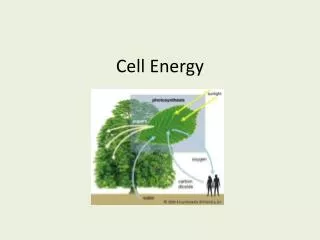
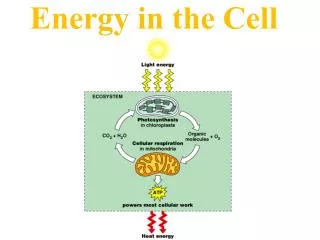
Photosynthesis • Using light, CO2, and H2O to make food (glucose) • Sugar and oxygen are released • Organisms with pigments for capturing the energy from light • Chlorophyll (green)
Where Does It Take Place? • Photosynthesis takes place in the chloroplast (collects light energy) • Many in each cell of the leaves • Thylakoids – disk or pancake shape • Grana – stacks of thylakoids • Stroma – gel –like fluid around thylakoids
2 Reactions of Photosynthesis • Light Reaction (Light dependent) • Occurs in the thylakoid • Light is absorbed • H2O is split • Oxygen is released • Electrons move through the Electron Transport Chain (ETC) • NADPH and ATP made
Dark Reaction (Light Independent) • Calvin Cycle • Occurs in stroma • NADPH and ATP (released in light reaction) used to “fix” CO2 into glucose
Cellular Respiration • Breaking down food molecules to release energy (MAKES ATP) • Glycolysis is the first process in breaking down glucose • Takes place in the cytoplasm of a cell • Changes glucose into 2 pyruvate • 2 ATP used, 4 ATP made (net of 2ATP)
Two Types of Cellular Respiration (after glycolysis) • Aerobic Respiration • Takes place in the MITOCHONDRIA • Occurs when Oxygen is present • Pyruvate from glycolysis is broken down into CO2 and Water • Has 2 parts Kreb’s cycle and ETC • Makes 36 ATP from 1 glucose molecule
Anaerobic Respiration • Break down of pyruvate without OXYGEN • Occurs in cytoplasm • Does not produce many ATP • Two kinds • Lactic Acid Fermentation • Alcohol Fermentation
Alcoholic Fermentation • How we make beer, wine and some breads • Starts with pyruvate • End Products: 2 - ATP 2 - CO2 2 - Ethanol’s
Lactic Acid Fermentation • Makes our muscles sore if we work out too much • Starts with pyruvate • End Products: • 2 – ATP • 2 - Lactic Acids
Respiration Equation C6H12O6 + O2CO2 + H2O ATP released
Final Accounting • The breakdown of glucose nets a TON of energy for the cell. • We can harvest a total of 36 ATP per molecule of glucose. • Remember that extremely active cells need tons of energy from the mitochondria.