Download
1 / 8
90 likes | 248 Views
This article delves into various factors that influence interpersonal attractiveness and the dynamics of love. It examines popular sayings like “birds of a feather flock together” and “opposites attract,” alongside the mere exposure effect, similarity, and competence. We explore the halo effect, where physically attractive individuals are often perceived as smarter and kinder. Additionally, we discuss different types of love—intimate, companionate, and maternal/paternal—and highlight Robert Sternberg’s triangular theory of love, unveiling the keys to long-lasting, committed relationships.

E N D
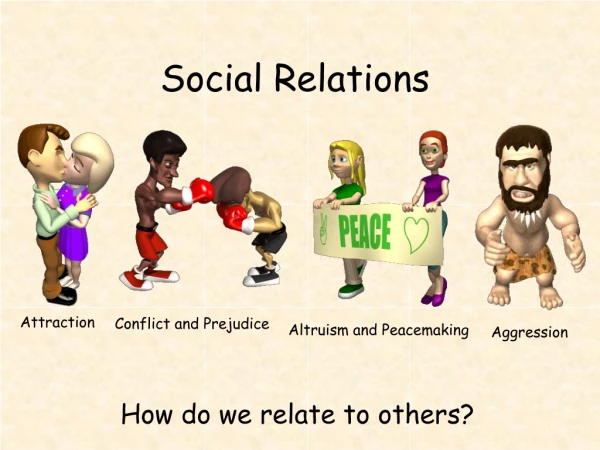
Social Relations What factors influence attractiveness?
Proximity (Sometimes called: The Mere Exposure Effect- used by advertisers) • Similarity • Competence • Disclosure • Physical attractiveness • What about love?
The Halo Effect Physically attractive people are • Smarter • Nicer • More talented
Different types of love… • Intimate • Companionate • Maternal/Paternal