Perception
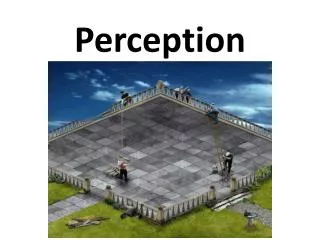
Explore the intricate functions of sensation and perception in shaping our understanding of the world. Sensation involves detecting stimuli from our environment, while perception is the interpretation of these signals, creating our sense of reality. This process is impacted by individual experiences, schemas, biases, and the dynamic interactions between behavior and the environment. Through examples like visual illusions and the cocktail party phenomenon, we uncover how perception can distort our understanding of reality. Ultimately, reality is constructed through our unique interpretations rather than merely detected.

Perception
E N D
Presentation Transcript
What is the function of Sensation-Perception? • Minds Process Information • Coordinate parts of the body • Coordinate behavior-environment interactions “All about Survival” Adaptations
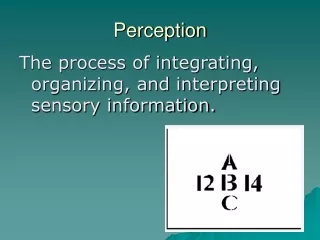
Terminology • Information = Stimulus (stimuli) From within the body or outside • Two Dimensions to Information: • Sensation = Signal (Detect) • Perception = Message (Interpret)
The Question Is there ‘one’ reality that we all experience in the same way?
Schemas • Knowledge Structures • Change with experience • Assimilation • Accommodation • Schemas affect perception • Filtered Understanding • Biases
Dynamic Nature of Perception Stimulus Change
Attention Cocktail Party Phenomenon
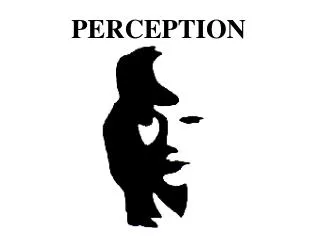
Distortions Mueller-Lyer Illusion
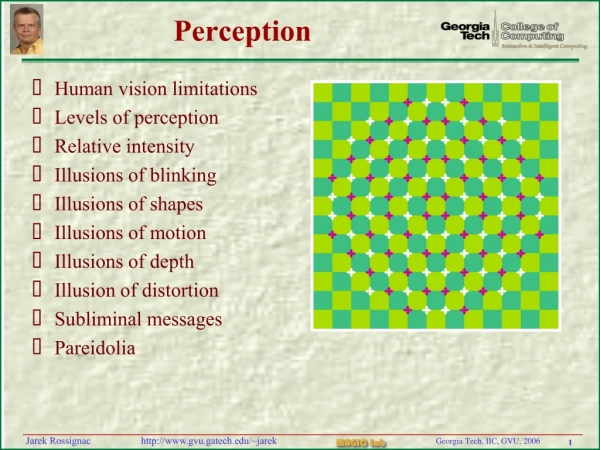
General Principles • Limited Information • Experience is Critical • Relative Nature of S&P • Dynamic Nature of S&P • Tricking the Mind: Illusions
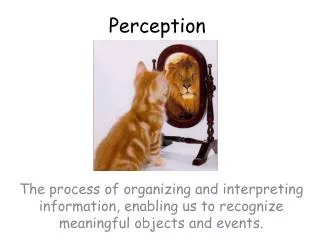
What Does It All Mean? Reality is Constructed not Contacted Reality is Created not Detected Each of us ‘knows’ our own reality