Civilization in Mesopotamia
220 likes | 361 Views
Civilization in Mesopotamia. Pages 89-95. Civilization. A society with cities, architecture, social classes, religion, writing, inventions, government, surplus of food, and division of labor. Technology. The skills and knowledge to make products or meet goals


Civilization in Mesopotamia
E N D
Presentation Transcript
Civilization in Mesopotamia Pages 89-95
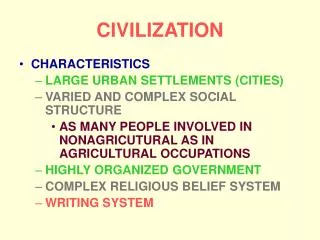
Civilization • A society with cities, architecture, social classes, religion, writing, inventions, government, surplus of food, and division of labor
Technology • The skills and knowledge to make products or meet goals • Examples: irrigation, wheel, sailboats
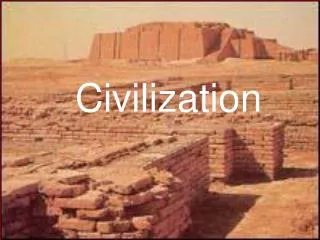
Ziggurat • A mud brick temple • A shrine for the city’s god • Was the center for activity
Government • An organized system that groups use to make laws and decisions
City-state • Includes a city and the farmland around it • Each had its own leader, but fought for water and farmland
Monarchy • A government in which one person has complete authority or right to rule • It was believed that the rulers were selected by god.
Authority • Right to rule
Surplus • An extra supply • Led to a division of labor
Merchants • People who buy and sell goods for a living
Social class • Groups with different levels of importance
Scribe • People who wrote things for others
Members of the upper class • People with wealth and honor • Kings • Priests
Members of the middle class • Skilled workers • Merchants • Scribes • Doctors • Carpenters • Potters • Managers • Bricklayers • craft workers
Members of the lower class • Unskilled workers • Slaves by war or by debt
Q1: Changes early settlers made in their environment • Ditches • Dikes, walls • Canals • Why? To control water – bring water to farms, prevent flooding, save water for later use
Q2: Innovations that helped move things • Wheeled cart • Copper wheel • Sailboats
Q3 What did Mesopotamians believe? • If they pleased their gods, they would get a large harvest • They thought floods and other natural disasters were signs that the gods were angry with them
Q4: Government of Mesopotamia • A monarchy
Q5: Effect of a surplus of food • Led to a division of labor • Could trade for what they needed
Q6 Leadership roles for women • Religious leaders • Trained as scribes • Own businesses
Q7: Innovations • Iku – acre – to measure land • Quart – to measure wheat & barley • Cuneiform – Sumerian writing • Sailboat – to move supplies upriver • Wheeled cart – to move supplies over ground • Minute and hour – to measure time