The Seeds of Revolution: Inequalities and Events Leading to the French Revolution
The French Revolution was fueled by deep social, political, and economic inequalities. The stark divide between the estates, with the 1st and 2nd Estates enjoying privileges while the 3rd Estate faced starvation, created widespread resentment. Distrust in the monarchy, especially towards Queen Marie Antoinette, intensified the demands for reform. Influenced by Enlightenment ideas and the American Revolution's success, the 3rd Estate's frustrations erupted into action, leading to the establishment of the National Assembly and the iconic Storming of the Bastille as they sought radical change.

The Seeds of Revolution: Inequalities and Events Leading to the French Revolution
E N D
Presentation Transcript
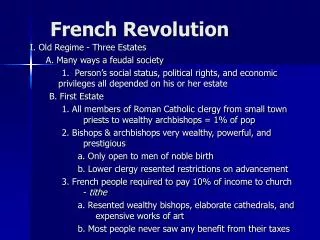
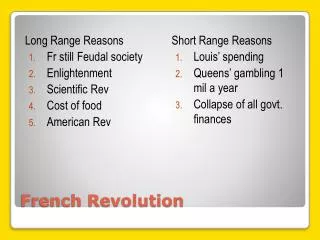
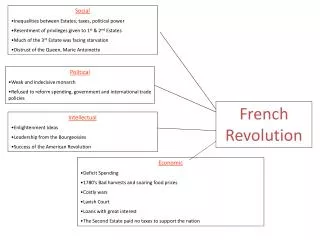
Social • Inequalities between Estates; taxes, political power • Resentment of privileges given to 1st & 2nd Estates • Much of the 3rd Estate was facing starvation • Distrust of the Queen, Marie Antoinette • Political • Weak and indecisive monarch • Refused to reform spending, government and international trade policies French Revolution • Intellectual • Enlightenment Ideas • Leadership from the Bourgeoisies • Success of the American Revolution • Economic • Deficit Spending • 1780’s Bad harvests and soaring food prices • Costly wars • Lavish Court • Loans with great interest • The Second Estate paid no taxes to support the nation
France faces financial crisis (1789) Louis XVI is forced to call the Estates-General The Third Estate establishes the National Assembly and makes the Tennis Court Oath Louis XVI calls in a mercenary army to defend Versailles The Third Estate demands reform in the meeting policies of the Estates-General The Storming of the Bastille Dawn of the Revolution