Understanding Semicolons: Usage and Examples
This guide explores the semicolon, a punctuation mark that serves as both a period and a comma. Learn how to effectively use semicolons to separate complete thoughts or items in a series. Discover the rules for joining independent clauses that are closely related, and understand when to use a period instead. Gain clarity on the function of independent clauses, which express complete thoughts and can stand alone as sentences. Enhance your writing by mastering the art of the semicolon with these simple guidelines.


Understanding Semicolons: Usage and Examples
E N D
Presentation Transcript
Semicolons David Parker Raylandus Lynch Skylar Chatman Wesley Hearn
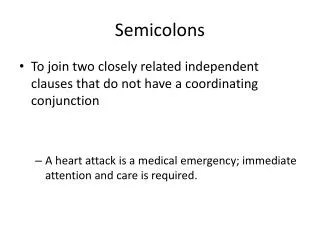
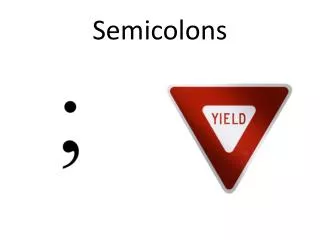
Semicolon • A semicolon is part period and part comma. It can separate complete thoughts or it can separate items within a series. • Use a semicolon between parts of a compound sentence if they are not joined byand, but, for, nor, or, so, or yet. • Use a semicolon to join independent clauses only if the ideas in the independent clauses are closes related. Otherwise, use a period to make two separate sentences.
Independent Clause • An independent (or main) clause expresses a compete thought and can stand by itself as a sentence.