Download
1 / 7
70 likes | 201 Views
This breakout session led by David Fergusson explored the dynamics of collaboration, emphasizing the importance of finding mutual benefits and fostering symmetry in relationships. Key themes included identifying good collaborators, managing risks, and recognizing the balance between trust and responsibility. The discussion highlighted potential barriers such as costs, cultural differences, and conflicting agendas. Participants shared insights on creating effective partnerships, emphasizing the need for complementary skills and the role of trust in successful collaborations. Strategies for working in diverse teams and aligning project goals were also examined.

E N D
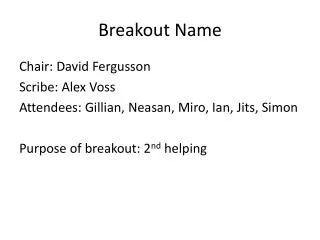
Breakout Name Chair: David Fergusson Scribe: Alex Voss Attendees: Gillian, Neasan, Miro, Ian, Jits, Simon Purpose of breakout: 2nd helping
Who/Why should collaborate? • People who can find a mutual benefit, should aim for symmetry • Looking for collaboration or being forced? • Lack a skill • Lack a resource • Told to • Who is a good collaborator? Reputation • Groups that collaborate frequently are more successful – cf. mammals • Complimentarity and synergistic effects • Tendency towards specialisation? • Creating new niches – broad vs. specialist expertise • At what level to collaborate – only management vs. at the coal face
How? • Looking for symmetry in relationship • Don’t if it’s just because you’re forced / for £s • Make sure overheads are in relation to gains • Lean and light-weight • Work with people you know you can trust • Be prepared to ad hoc • Be prepared to formalise • Be aware of and manage risks • Appropriate step size – ramping up • ‘trust organisations’ – EGEE, CERN, EBI • Network • Make sure participants are aligned to goals of the project
What stops you? • Cost/time • Risks • Dependencies • Distrust, misunderstandings • Conflicting agendas • Differences in cultures • across nations • across disciplines • Funding – tiny grants • Redundancy – repetition • Time differences • Collaboration technologies • Lack of control vs. responsibility • Personalities – people • Authority vs. competence It’s about (managing)people!
Conclusions • BURP