Download

1 / 5
50 likes | 167 Views
Step back into Roman times, where bloodthirsty games captivated the masses in grand amphitheatres. Gladiators, often slaves or prisoners, fought ferocious beasts and each other, with some earning their freedom through valor. The architectural marvels of Roman houses, particularly those of the affluent, showcase incredible craftsmanship with remains of villas and towns still visible today. Meanwhile, Celtic tribes built round homes with thatched roofs, employing local materials. Discover the fascinating contrasts between Roman and Celtic life and their lasting impact on history.

E N D
ROMANS BY HARRYP&JORDAN
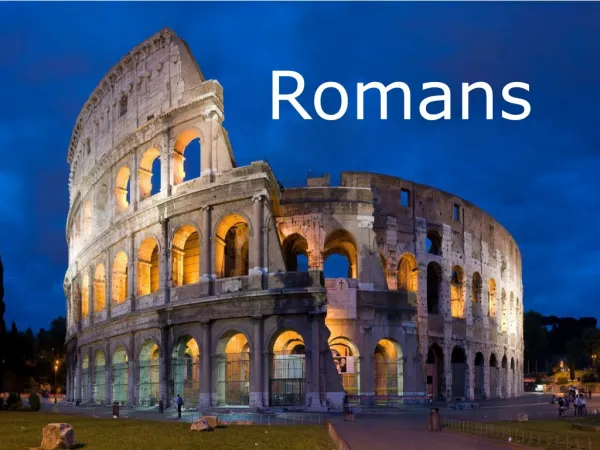
The ampitheatreof dooooooom • In the roman times they enjoyed blood thirtsty games.& criminals hat to try and kill lions and bears.
gladiators The best way to get a man to fight to the death is to use a man who has nothing to lose, which is why slaves, criminals, and prisoners-of-war were ideal for the job. If a man was really good, he might keep winning and get his freedom.
Rich roman HOUSES even towns have been found. Roman houses, especially ones belonging to rich people, were so well built that the remains of villas and even towns have been found. Roman houses, especially ones belonging to rich people, were so well built that the remains of villas and even towns have been found. Roman houses, especially ones belonging to rich people, were so well built that the remains of villas and even towns have been found.
Celtic houses The Celtic tribes lived in scattered villages. They lived in round houses with thatched roofs of straw or heather. The walls of their houses were made from local material. Houses in the south tended to be made from wattle (woven wood) and daub (straw and mud) as there was an ample supply of wood from the forests.