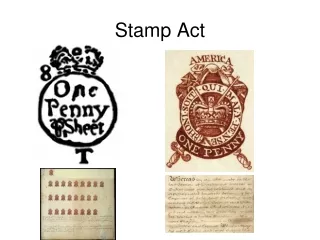
The Stamp Act
The Stamp Act of 1765 was a pivotal law enacted by the British government, imposing a direct tax on the transfer of legal documents, newspapers, and various other items in the American colonies. It marked the first attempt by Britain to levy a direct tax, igniting widespread opposition led by figures like Patrick Henry. Colonial citizens protested vehemently, leading to significant unrest and pushing the British government to repeal the Act in early 1766. This event played a crucial role in the growing tension between the colonies and Britain, ultimately contributing to the American Revolution.

The Stamp Act
E N D
Presentation Transcript
The Stamp Act By: Mr. Bearden
Definition: • A law enacted by a government that requires a tax to be paid on the transfer of certain documents
Date: 1765
Five Key Components: First attempt to pass a direct tax on the colonies by the British. The tax was on all legal documents, permits, commercial contracts, newspapers, wills, pamphlets, and playing cards in the colonies. Patrick Henry led colonial opposition to the Stamp Act. Colonial citizens took to the streets in protest over the taxes. In early 1766 the British repealed the Stamp Act because lack of colonial cooperation.
Sources: “ Stamp Act of 1765,” Wikipedia.com “An emblem of the affects of the Stamp,”Brittanica.com