Download
1 / 4
40 likes | 198 Views
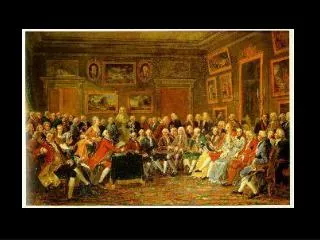
The Literary Salon is a vibrant gathering under the guidance of an inspiring host, designed to amuse participants while enriching their knowledge through engaging conversations. Rooted in the tradition established in 17th and 18th century France, these salons were spaces for intellectual exchange and cultural dialogues. The concept, derived from Horace's maxim "aut delectare aut prodesse est" (to either please or educate), continues to influence modern gatherings. Historically, salons also took place in intimate settings, fostering deep connections among attendees.

E N D
The Literary Salon • a gathering of people under the roof of an inspiring host, held partly to amuse one another and partly to refine the taste and increase the knowledge of the participants through conversation. • “autdelectareautprodesseest“ • Horace’s definition of the aims of poetry, "either to please or to educate.” • Salons, commonly associated with French literary and philosophical movements of the 17th and 18th centuries, were carried on until quite recently in urban settings.
One important place for the exchange of ideas was the salon. • The word salon first appeared in France in 1664 • Literary gatherings before this were often referred to by using the name of the room in which they occurred, like cabinet, réduit, ruelle and alcôve.
Before the end of the 17th century, these gatherings were frequently held in the bedroom (treated as a more private form of drawing room) • a lady, reclining on her bed, would receive close friends who would sit on chairs or stools drawn around