Download
1 / 9
90 likes | 109 Views
Learn about the key concepts of life in an ecosystem, including the role of producers and consumers, and how energy is obtained through processes like photosynthesis and chemosynthesis.

E N D
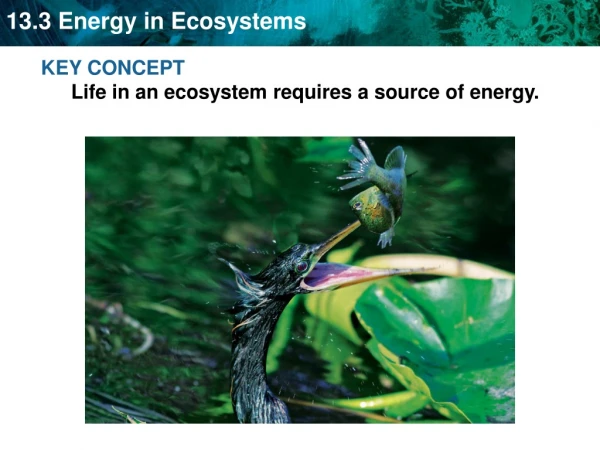
KEY CONCEPT Life in an ecosystem requires a source of energy.
Producers provide energy for other organisms in an ecosystem. • Producers get their energy from non-living resources. • Producers are also called autotrophs because they make their own food.
Producers provide energy for other organisms in an ecosystem. • Consumers are organisms that get their energy by eating other living or once-living resources. • Consumers are also called heterotrophs because they feed off of different things.
carbon dioxide + water + hydrogen sulfide + oxygen sugar + sulfuric acid Almost all producers obtain energy from sunlight. • Photosynthesis in most producers uses sunlight as an energy source. • Chemosynthesis in prokaryote producers uses chemicals as an energy source.
An organism that makes its own food is called a • Consumer • Producer • Heterotroph • Chloroplast
A moose is considered to be a consumer because it • Gets energy by eating other resources • Makes its own food • Forms carbohydrates using chemicals • Uses sunlight for energy
The basis for the energy in an ecosystem is provided by • Consumers • Heterotrophs • Chemosynthesis • Producers
Most producers get energy from the sun using the process of • Respiration • Consumption • Photosynthesis • Chemosynthesis
Chemosynthesis is the process in which organisms • Form carbohydrates using chemicals • Get energy by eating other organisms • Make chemicals that absorb sunlight • Use energy from the sun to form carbohydrates