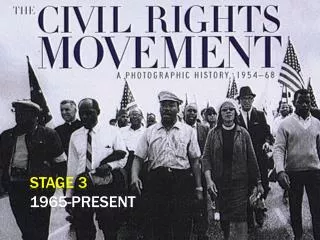
The Impact of the 24th Amendment on Civil Rights and Economic Issues (1965-1968)
The 24th Amendment aimed to eliminate poll taxes, fostering greater participation in democracy. However, the Civil Rights Movement (CRM) faced significant challenges, including widespread violence, police brutality, and social unrest, highlighted by the Selma March and various riots between 1965 and 1968. Economic issues persisted, as the Kerner Commission called for jobs and housing reforms, but frustrations grew amidst slow changes. While Dr. King advocated for non-violence, other leaders like Malcolm X and the Black Panthers pushed for more militant approaches, advocating for self-defense and economic rights.

The Impact of the 24th Amendment on Civil Rights and Economic Issues (1965-1968)
E N D
Presentation Transcript
24th Amendment – eliminating poll taxes • bombings • Selma March • TV- public sentiment • VRA 1965 • CRM – Post 1965 Economic Issues Legislation
Housing • Cities – poor • Migration North • Discrimination in housing Many blacks now Angry a frustrated! Laws ≠ changing attitudes
Catalyst – Police brutality • Violence • Property damage • ‘65-’68 dozens of riots Watts riot
KernerCommission • Recommended: • 2 million new jobs in inner city • $6 million – new public housing Why? Causes? - Dr. King responds with speech
Dr. King losing popularity among A.A. leaders • Critiques: • Non-violence: doesn’t solve economic problems • Chicago Movement – ineffective Economic rights What good is it if we can dine out now, but don’t have the money to do it?
Impatient with slow change • Black Power • Malcom X Black Panthers • Black nationalism • Militancy • Self –defense • Take your freedom, don’t ask for it • Dr. King rejected this philosophy as one of hopelessness and despair Black power
Speaking out against Vietnam War • Connected War and Poverty • Blackmailed by FBI • Riots break out Dr. King Assassinated
Fair Housing Provision • Outlawing discrimination in housing sales and rentals • Dept. of Justice authority to file suite against such discrimination Civil Rights act of 1968
Step 1: get in your normal row groups Each person will have a Number/Letter Combination Ex. Adib = 2B Anthony = 5E