Conception and Fetal Development
This chapter delves into the intricate processes of conception and fetal development, covering key components of fertility in both males and females. It outlines the menstrual cycle, hormonal functions, and the mechanisms of cellular division such as mitosis and meiosis. The chapter also discusses fertilization, embryonic development, and the essential roles of the placenta and umbilical cord. Key milestones in fetal development are highlighted, along with what expectant parents should be aware of during pregnancy, including significant changes and growth stages of the fetus from conception to birth.

Conception and Fetal Development
E N D
Presentation Transcript
Conception and Fetal Development Chapter 4
Conception Components of fertility • Male and female • Menstrual Cycle • Hormonal • Ovarian • Endometrial
Hormonal Function • Function of hormones • FSH • LH • Progesterone • Testosterone
Cellular Division • Mitosis cellular division for healing • Meiosis cellular division r/t reproduction • Oogenesis • Spermatogenesis
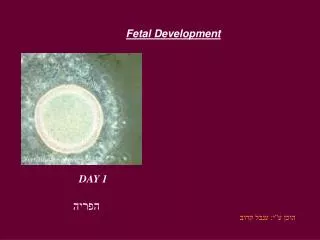
Fertilization • Viability of ova vs. sperm • Fertilization occurs in distal 1/3 of tube • Embryonic development occurs immediately • HCG stimulates corpus luteum to secrete progesterone
Implantation • Occurs 7 days after fertilization • Implants near fundus • Chorionic villae implant into endometrium which becomes decidua • Placental formation begins • Outer layer of chorionic villae become membranes- chorion and amnion
Placenta • Structure: cotyledons, circulation • Functions • Fetal respiration, nutrition, excretion • Transport of passive immunity (IGG) • Stores glycogen and iron • Produces HCG, progesterone, estrogen, HPL • Suppresses maternal immune response
Umbilical Cord and Amniotic Fluid • Umbilical Cord One vein-two arteries • Wharton’s jelly • Amniotic fluid • Volume changes • Diagnostic • Alkaline
Fetal Circulation • Maternal blood carries oxygen disposes of waste • Fetal Hgb greater affinity for 02 • Vein transports 02 • Purpose of foramen ovale and ductus is to bypass non-functional fetal organs
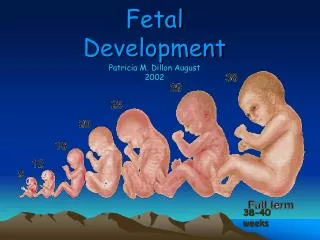
Human Development • Pre-embryonic-first 21 days • Embryonic-21days-9 wks • Most susceptible to teratogens • Period of differentiation • Fetal 9-40 weeks • Period of continued development
What parents want to know? • 4-12 wks- All body parts formed, heart beating • 16 wks- Sex can be determined • 20 wks- Lanugo, vernix, hair, movement, favorite position, sleep-awake pattern, suck, grasp • 24 wks- Respiratory movements
Development Milestones • 28 wks- eyes open, breathe, surfactant developing, 2/3 of birth weight • 32 wks- active period, gaining weight • 35-36 wks- surfactant will prevent alveoli collapse • 38-40 wks- passive immunity (IGG) received from mom