Download
1 / 3
30 likes | 142 Views
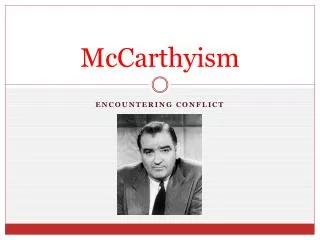
McCarthyism (part of 26.4). [T]he line between investigating and persecuting is a very fine one and the junior Senator from Wisconsin has stepped over it repeatedly…. We must not confuse dissent with disloyalty. We must remember always that accusation is not proof …. — Edward R. Murrow

E N D
McCarthyism (part of 26.4) [T]he line between investigating and persecuting is a very fine one and the junior Senator from Wisconsin has stepped over it repeatedly…. We must not confuse dissent with disloyalty. We must remember always that accusation is not proof…. — Edward R. Murrow Define the following terms: persecuting & dissent. 2. What does Murrow mean by “We must remember always that accusation is not proof”?
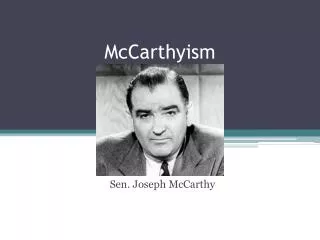
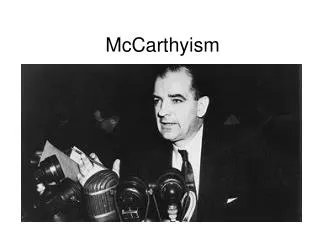
Rise of McCarthyism • 1950- Senator John McCarthy wanted to gain popularity for re-election • Ran a campaign against communism that used smear tactics to destroy the reputations of many government workers • Many accused people lost jobs as McCarthy became popular • McCarthy was re-elected and became in charge of committee • Hysteria and fear became popular- accusations were common in U.S. government and the U.S. population
Fall of McCarthyism • Went after larger people and groups- ex. Secretary of State George Marshall and U.S. Army • Led to Army-McCarthy Hearings- televised event that led to McCarthy’s fall • America saw his bullying tactics and he lost credibility • Although he lost power, common theme remained in the United States • FEAR OF COMMUNISM!!!