The Erasmus+ Programme: Enhancing Mobility and Quality in European Higher Education
Erasmus+ plays a vital role in the context of the EU’s strategic goals for education, promoting smart, sustainable, and inclusive growth. It seeks to improve the quality and relevance of higher education while strengthening cooperation among universities across Europe and beyond. The programme supports high achievement levels, enhances employability through skill development, and addresses the needs of the labor market. With increased budget and focus on quality mobility, the UK is also positioning itself to benefit through enhanced outward mobility initiatives.

The Erasmus+ Programme: Enhancing Mobility and Quality in European Higher Education
E N D
Presentation Transcript
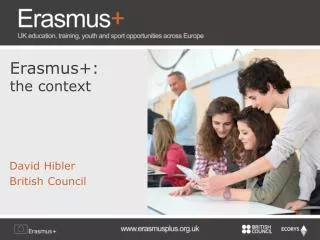
Erasmus+:the context David Hibler British Council
Introduction • Wider EU strategic context • How the programme reflects this • Where does the UK sit?
EU/EC strategic context • EU 2020 • Jobs and growth • Conditions for smart, sustainable, inclusive growth • Specific indicators: employment; R&D; education; climate/energy; inclusion • Agenda for modernisation of Higher Education • Increase attainment levels • Improve quality and relevance • Strengthen quality through mobility • European Higher Education in the world • Supporting agenda for internationalisation • Promotes mobility and cooperation between universities, EU MS and non-EU countries • To enhance quality of European education
Other strategic contexts: the Bologna Process • Supported and reinforced by the European Commission • Creation of European Higher Education Area • Mobility Strategy emphasises quality: “ Mobility is essential to ensure high quality higher education, and it is also an important pillar for exchange and collaboration with other parts of the world.” [NB Signed by 48 Ministers of Higher Education]
Emerging themes of strategic context • Jobs/growth/employability – universities and the labour market – the ‘skills gap’ • Europe as the preferred destination for mobile students – the EHEA. But, competition! • Quality – both quality endowed by mobility, and the quality of mobility
How has this influenced Erasmus+? • The scale of the programme – a ‘favoured child’: • 40% increase in budget (but, profile is not uniform) • implied growth in numbers • Changed frame of reference – a global dimension: • Europe in active competition: • for talent • to continue as largest importer of mobile students • Focus on quality: • instruments/tools of programme – ECHE; academic recognition • increased OS rates • increased budget for linguistic support
Where does the UK sit? • Growth in ambition • UK government support for outward mobility: • Tuition fee support • Outward Mobility programme • Institutions expressing new level of interest and commitment – targets for mobility etc. • Challenges: • Maintain growth in face of some financial pressure • Master structure and detail of new programme and use to best advantage