Managing Reed Canarygrass (Phalaris arundinacea): Characteristics and Control Methods
Reed Canarygrass (Phalaris arundinacea) is a green, erect plant found in wet areas of Pennsylvania, causing problems particularly for the Delaware River ecosystem. This invasive species, introduced in the 1920s for livestock forage and erosion control, can reach heights of 3-7 feet, with hollow stems and flower spikes appearing in June. It tolerates both inundation and drought, spreading through rhizomes and seeds, thereby outcompeting native vegetation. Effective control measures include hand pulling, burning, herbicides, and replanting with native species to prevent monoculture and erosion.

Managing Reed Canarygrass (Phalaris arundinacea): Characteristics and Control Methods
E N D
Presentation Transcript
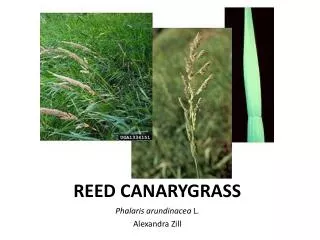
REED CANARYGRASS Phalaris arundinacea L. Alexandra Zill
Characteristics • Found in PA wet areas • Particular problem for Delaware River • Green erect plant with hollow stems 3-7 ft tall • Flowers in June
Characteristics • Tolerates long periods of inundation • Also tolerant to drought • Spreads by rhizomes and wind dispersed seeds • Outcompetes native species to form monoculture • Seeds germinate immediately after maturing • Vigorously spreading rhizomes that are hard to completely eliminate
Characteristics • European stock brought in 1920’s as forage for livestock and erosion control • Native variety now nearly indistinguishable from introduced • Can buy cultivars at home centers (variegated Ribbon grass) and seeds on eBay • Can be confused with Common reed, Canada bluejoint, and Orchard grass
Control • Hand pulling • Burning • Herbicides • Discing/plowing • Mowing • Covering with plastic In all cases replanting with native species is important to preventing return and erosion Continued monitoring necessary