Download
1 / 19
190 likes | 343 Views
This summary explores essential concepts of cell communication and signal transduction in cellular biology. It examines how yeast and animal cells respond to various signaling molecules, including hormones, local mediators, and neurotransmitters. Key figures illustrate different signaling mechanisms, such as contact-dependent signaling and the complexity of signaling cascades. The role of receptors, both cell-surface and intracellular, in mediating responses to extracellular signals is highlighted. This foundational knowledge is crucial for understanding cellular behavior and interactions.

E N D
16. Cell Communication Essential cell biology 533-572
Fig.1: Yeast cells respond to mating factor Fig.2: Signal transduction is the process whereby one type of signal is converted to another.
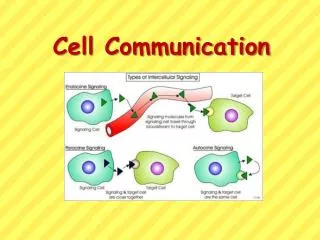
Fig.3: Animal cells can signal to one another in various ways.
Fig.4: Contact dependent signaling controls nerve-cell production.
Tab.1: Some examples of signal molecules Hormones Adrenalin increases blood pressure, heart rate, and metabolism Site of origin: adrenal gland Derivative of the aminoacid tyrosine
Local mediators Epidermal growth factor (EGF) stimulates epidermal and many other cell types to proliferate Site of origin: various cells Protein
Neurotransmitters Acetylcholine excitatory neurotransmitter at many nerve-muscle synapses and in central nervous system Site of origin: nerve terminals Derivate of cholin
Contact-dependent signal molecules Delta inhibits neighboring cells from becomming specialized in a same way as the signaling cell
Fig.5: The same signal molecule can influence different responses in diffrent target cells. Fig.6: An animal cell depends on multiple extracellular signals.
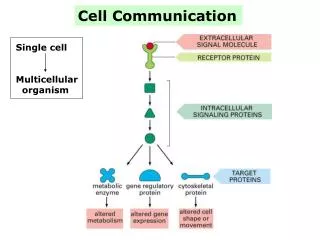
Fig.7: Extracellular signals alter the activity of a variety of cell proteins to change the behavior of the cell. Fig.8: Cellular signaling cascades can follow a complex path.
Fig.9: Extracellular signal molecules bind either to cell-surface receptors or to intracellular enzymes or receptor. intra extra
Fig.10: Nitric oxide (NO) triggers smooth muscle relaxation in a blood-vessel wall.
Fig.11: Some small hydrophobic hormones bind ti intracellular receptors that act as gene regulatory proteins. testosteron
Fig.12: The steroid hormone cortisol acts by activating a gene regulatory protein.
Fig.13: Most signal molecules bind to receptor proteins on the target cell surface. Human growth hormon Receprot proteins Plasma membrane
Fig.14: Cell-surface receptors fall into three basic clasess.
Fig.15: Many Intercellular signaling proteins act as molecular switches
Fig.17: G proteins dissociate into two signaling proteins when activated. Fig.16: All G-protein-linked receptors possess a similar structure.
Fig.18: The G-protein a submit switches itself off by hydrolizing its bound GTP.