Effects of B-V Angle and Averaging Interval on Solar Wind Turbulence
10 likes | 140 Views
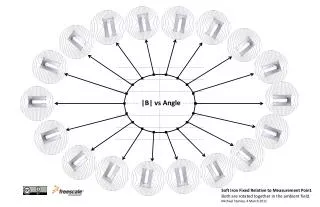
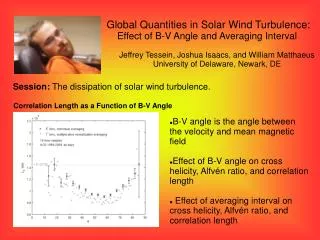
This study by Tessein, Isaacs, and Matthaetus from the University of Delaware investigates how the B-V angle—the angle between solar wind velocity and the mean magnetic field—affects solar wind turbulence characteristics. Key findings include the influence of B-V angle on cross helicity, Alfvén ratio, and correlation length. The research also highlights the significance of the averaging interval in these parameters. The findings enhance our understanding of solar wind turbulence and its behaviors, contributing to the broader field of space weather research.


Effects of B-V Angle and Averaging Interval on Solar Wind Turbulence
E N D
Presentation Transcript
Global Quantities in Solar Wind Turbulence: Effect of B-V Angle and Averaging Interval Jeffrey Tessein, Joshua Isaacs, and William Matthaeus University of Delaware, Newark, DE Session: The dissipation of solar wind turbulence. Correlation Length as a Function of B-V Angle • B-V angle is the angle between the velocity and mean magnetic field • Effect of B-V angle on cross helicity, Alfvén ratio, and correlation length • Effect of averaging interval on cross helicity, Alfvén ratio, and correlation length