The Central Dogma of Molecular Biology: Gene Expression and Protein Synthesis
This overview of gene expression and protein synthesis explores how different cells in an organism use the same DNA to perform distinct functions. It covers the processes of transcription and translation, detailing the roles of mRNA, tRNA, and ribosomes in synthesizing proteins from gene sequences. The structure and stability of DNA and RNA are explained, including the bonding patterns of nucleotides. Key concepts like codon recognition and the formation of amino acids from mRNA sequences are highlighted, demonstrating the intricate pathway from DNA to functional proteins.

The Central Dogma of Molecular Biology: Gene Expression and Protein Synthesis
E N D
Presentation Transcript
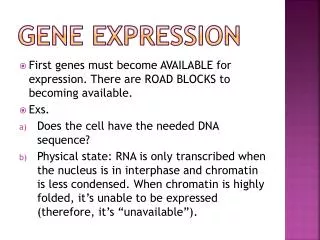
Gene expression • All cells in one organism have the same DNA. But different cells have very different functions. • In each cell at certain times only some genes are expressed. • Which genes are expressed at which times?
Cells muscle nerve
DNA matching • Every A forms two weak hydrogen bonds with T. • Every T forms two hydrogen bonds with A. • Every C forms three weak hydrogen bonds with G. • Every G forms three hydrogen bonds with C.
RNA • RNA is also a sequence of nucleotides. • RNA means “ribonucleic acid”. • DNA means “deoxyribonucleic acid”.
DNA vs RNA • Both are strings of nucleotides. • DNA is usually double-stranded; RNA is single-stranded. • RNA is usually much shorter than DNA. • RNA replaces each T by U (uracil). • DNA contains deoxyribose while RNA contains ribose. This makes DNA more stable chemically than RNA.
DNA and RNA • DNA in your cells is in the nucleus; RNA can be anywhere in the cell. • Proteins are made directly using RNA, not DNA.
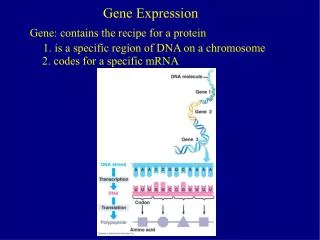
Central Dogma • A protein-coding region of DNA is copied to messenger RNA (mRNA) by transcription. • The mRNA leaves the nucleus and goes to a ribosome. • The ribosome uses the mRNA to make a protein by translation.
Translating codons • Ala/A GCT, GCC, GCA, GCG Leu/L TTA, TTG, CTT, CTC, CTA, CTG • Arg/R CGT, CGC, CGA, CGG, AGA, AGG Lys/K AAA, AAG • Asn/N AAT, AAC Met/M ATG • Asp/D GAT, GAC Phe/F TTT, TTC • Cys/C TGT, TGC Pro/P CCT, CCC, CCA, CCG • Gln/Q CAA, CAG Ser/S TCT, TCC, TCA, TCG, AGT, AGC • Glu/E GAA, GAG Thr/T ACT, ACC, ACA, ACG • Gly/G GGT, GGC, GGA, GGG Trp/W TGG • His/H CAT, CAC Tyr/Y TAT, TAC • Ile/I ATT, ATC, ATA Val/V GTT, GTC, GTA, GTG • START ATG STOP TAG, TGA, TAA
DNA for beta hemoglobin • ATGGTGCATCTGACTCCTGAGGAGAAGTCTGCCGTTACTGCCCTGTGGGGCAAGGTGAACGTGGATGAAGTTGGTGGTGAGGCCCTGGGCAGGCTGCTGGTGGTCTACCCTTGGACCCAGAGGTTCTTTGAGTCCTTTGGGGATCTGTCCACTCCTGATGCTGTTATGGGCAACCCTAAGGTGAAGGCTCATGGCAAGAAAGTGCTCGGTGCCTTTAGTGATGGCCTGGCTCACCTGGACAACCTCAAGGGCACCTTTGCCACACTGAGTGAGCTGCACTGTGACAAGCTGCACGTGGATCCTGAGAACTTCAGGCTCCTGGGCAACGTGCTGGTCTGTGTGCTGGCCCATCACTTTGGCAAAGAATTCACCCCACCAGTGCAGGCTGCCTATCAGAAAGTGGTGGCTGGTGTGGCTAATGCCCTGGCCCACAAGTATCACTAA
Primary structure for beta hemoglobin • MVHLTPEEKSAVTALWGKVNVDEVGGEALGRLLVVYWTQRFFESFGDLSTPDAVMGNPKVKAHGKKVLGAFSDGLAHLDNLKGTFATLSELHCDKLHVDPENFRLLGNVLVCVLAHHFGKEFTPPVQAAYQKVVAGVANALAHKYH
Part of the two strands for beta hemoglobin • ATGGTGCATCTGACTCCT… • TACCACGTAGACTGAGGA… • The top is the sense or template; the bottom is the antisense or coding strand.
Transcription: Make mRNA • ATGGTGCATCTGACTCCT… sense • TACCACGTAGACTGAGGA… coding • AUGGUGCAUCUGACUCCU… mRNA
mRNA goes to a ribosome, outside the nucleus • AUGGUGCAUCUGACUCCU… mRNA
Eukaryotic cell • (1) nucleolus • (2) nucleus • (3) ribosomes (little dots) • (5) rough endoplasmic reticulum (ER) • (9) mitochondria • (10) vacuole • (11) cytoplasm
Ribosomes • The ribosome functions as a factory to make proteins. It uses two kinds of input: • (a) mRNA • (b) tRNA • It outputs a protein.
Ribosome translates mRNA • Ribosome (2) straddles mRNA (1) • It makes the protein (3). • It starts at AUG and ends at UAG
Transfer RNA (tRNA) • Each tRNA molecule has on one side a conformation that binds to the specific codon and on the other side a conformation that binds to the corresponding amino acid.
tRNA • CCA tail in orange, Acceptor stem in purple, D arm in red, Anticodon arm in blue with Anticodon in black, T arm in green.
tRNA carries the amino acid matched to the codon • UAC … M tRNA will bind with the codon AUG in the mRNA. • CAC … V tRNA will bind with the codon GUG in the mRNA.
mRNA in a ribosome has the genetic information • AUGGUGCAUCUGACUCCU… • UAC … M tRNA will bind with the codon AUG. • CAC … V tRNA will bind with the codon GUG.
Translating codons • Ala/A GCT, GCC, GCA, GCG Leu/L TTA, TTG, CTT, CTC, CTA, CTG • Arg/R CGT, CGC, CGA, CGG, AGA, AGG Lys/K AAA, AAG • Asn/N AAT, AAC Met/M ATG • Asp/D GAT, GAC Phe/F TTT, TTC • Cys/C TGT, TGC Pro/P CCT, CCC, CCA, CCG • Gln/Q CAA, CAG Ser/S TCT, TCC, TCA, TCG, AGT, AGC • Glu/E GAA, GAG Thr/T ACT, ACC, ACA, ACG • Gly/G GGT, GGC, GGA, GGG Trp/W TGG • His/H CAT, CAC Tyr/Y TAT, TAC • Ile/I ATT, ATC, ATA Val/V GTT, GTC, GTA, GTG • START ATG STOP TAG, TGA, TAA
mRNA goes to a ribosome • AUGGUGCAUCUGACUCCU… mRNA • UAC …. M tRNA • CAC … V tRNA • The ribosome matches UAC on tRNA with AUG on mRNA, then uses the M on the other end in the protein.
mRNA goes to a ribosome • AUGGUGCAUCUGACUCCU… mRNA • UAC …. M tRNA • CAC … V tRNA • The ribosome matches CAC on tRNA with GUG on mRNA, then uses the V on the other end to extend the protein.
Ribosome • In this manner, the ribosome continues to make the protein until it reaches a STOP codon.
When is a given gene being expressed? • A given protein is being made when its mRNA is present in the cell. • The DNA is always present.
When is a given gene being expressed? • To tell what is being expressed at a given time in a given cell, find out which mRNAs are present. • For each kind of mRNA, measure the quantity present.
Microarrays • A microarray consists of a pattern of thousands of features. • Each feature has some DNA that will probe and possibly bind with an mRNA sample. • Typically the feature is made to fluoresce under the presence of binding mRNA. • The brightness of the dot corresponds to the quantity of mRNA of the given sort that is present.
Microarrays • Typically the probe is attached to a solid surface which is a glass or silicon chip. It is then called a gene chip or Affymetrix microarray.
Introns • Introns are inserts in the DNA within portions that code for one protein. • The parts that code are exons.
cDNA • Complementary DNA (cDNA) is DNA synthesized from mature mRNA using reverse transcriptase. • AUGGUGCAUCUG mRNA • TACCACGTAGAC cDNA
cDNA • cDNA is more stable than RNA. • cDNA corresponds with the part of the genome from which introns have been removed. • cDNA does not correspond exactly to nuclear DNA.
The probes • Each dot can contain DNA, cDNA, or an oligonucleotide (oligo). • An oligonucleotide is a short fragment of single-stranded DNA, typically 5 to 50 nucleotides long.
Gene expression profiling • In an mRNA or gene expression profiling experiment the expression levels of thousands of genes are monitored simultaneously in parallel. This can be used to distinguish • (a) the effects of certain treatments • (b) the effects of diseases • (c) the effects of different stages of development.
Gene expression profiling • For example, microarrays can identify genes whose expression is changed in response to pathogens by comparing gene expression in infected cells to that in uninfected cells.
A microarray experiment • Suppose there are two cells--type 1, healthy, and type 2, diseased. Both have four genes A, B, C, D. We want to compare the expression of these genes in the two types of cell.