Download
1 / 9
110 likes | 230 Views
Symbolism is a powerful tool in communication, representing ideas beyond their literal meaning. It encompasses various elements such as objects, people, and places that stand for something greater. Symbols have universal meanings, like national or religious icons, while also carrying personal significance shaped by individual experiences. For instance, the American flag may embody patriotism for one and disdain for another. This activity encourages exploration of a chosen symbol, analyzing its standard interpretation alongside personal meanings, thus enhancing our understanding of symbols in literature and life.

E N D
What is it? • Symbol—a person, place, or object that stands for something beyond itself.
In your notes… • Write down as many symbols as you can think of.
Personal Meanings • National, religious, and cultural symbols have standard interpretations as well as a personal significance for each individual. • Personal significance varies. For example…
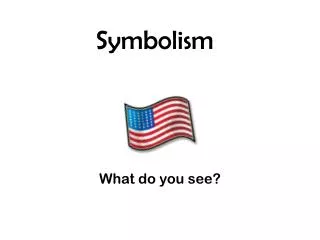
Example: The American Flag • Symbolizes the United States of America A U.S. army veteran cherishes its meaning. A terrorist finds it despicable.
Example: Dollar Bill • Symbolizes one dollar A billionaire considers it chump change. A beggar considers it an elusive treasure.
Activity—Quick Write! • Choose a well-known religious, national, or cultural symbol –this can be from the list you created earlier. • In your notes, write a paragraph analyzing its meaning. Include the standard meaning along with a personal interpretation and a personal interpretation from someone else.
LITERARY Symbols • A literary symbol gains its meaning from the context of a literary work and often changes as the work develops. • SILENTLY think of some symbols from Lord of the Flies. Jot them in your notes if you would like.
Example: The Conch Shell Note: You may not use this for your activity. • Represents: • Leadership • Order & Society • Civilization • Democratic Power • Discussion: What happens to the shell’s power over time and why?