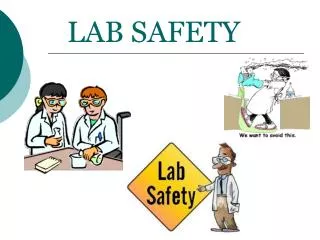
LAB SAFETY
Adhering to lab safety rules is crucial for maintaining a safe and effective working environment. Always wear appropriate personal protective equipment, secure loose items, and seek guidance from instructors before using apparatus. Keep your workspace tidy, report accidents immediately, and ensure equipment is cleaned after use. Familiarize yourself with hazardous materials such as flammable, corrosive, reactive, and poisonous substances to prevent accidents. By following these guidelines, you can contribute to a safe laboratory experience for everyone.


LAB SAFETY
E N D
Presentation Transcript
Rule 1 • Wear an apron, gloves, goggles and/or ear protection when needed.
Rule 2 • Always secure loose hair, clothing or jewelry.
Rule 3 • Always ask a teacher or lab assistant to check your apparatus before using it.
Rule 4 • Tell a teacher or lab assistant if there are any accidents as soon as they happen, or, as soon as you see them!
Rule 5 • Keep your work area clean and tidy. • Put equipment away when you are done with it.
Rule 6 • NEVER smell or taste chemicals.
Rule 7 • Do not leave any machinery running by itself, or, leave a flame burning unattended.
Rule 8 • Speak quietly and only speak about the work happening in the lab. It is very important to stay focused in the lab while working.
Rule 9 • Always clean equipment when you are done. Wash all test tubes, beakers and cylinders before leaving.
Rule 10 • Always clean your work area and wash your hands thoroughly when the lab is over.
Compressed Gas • Compressed gas is a gas that is in a cylinder that is under a lot of pressure. • A compressed gas cylinder can become like a rocket if the cylinder is damaged or, if the gasexpands due to change in temperature. • Common materialsHeliumPropaneOxygen
Flammable and Combustible Material These materials can easily catch fire. It is very important to keep these materials away from open flames. Common materials: Diesel fuel, gasoline, kerosine
Oxidizing Material • Materials that react and decompose with exposure to oxygen. • Can intensify fires and explosions. • Material could combust. • Common types:ozonenitric acidperoxide
Corrosive Material • Material that can attack metals • Material that can burn and destroyhuman tissues. • Common materialsSulfuric acidAmmoniaHydrochloric Acid
Poisonous • This symbol means very toxic and causes immediate and serious problems if ingested,inhaled or if it comes in contact with skin. • Common materials:Carbon monoxide (gas)Hydrogen sulfide
Poisonous • This sign indicates the material is poisonousand toxic that will cause less immediate effects. The effects may not be immediatebut can still be very serious. • Common materials:leadcadmiummercury
Biohazardous • Organisms or toxins that can cause infection in animals or people. • Common Materials:BacteriaParasitesViruses
Dangerously Reactive • Some materials react aggressively with others. • These types of materials often create uncontrolled reactions and the outcome is uncertain.