Download
1 / 8
80 likes | 205 Views
Nuclear energy is a powerful source of electricity, generating a significant amount from a small fuel quantity. It outlasts traditional fuels like coal and natural gas, making it efficient. However, the radioactive waste remains a critical concern due to the lack of safe disposal solutions. While nuclear reactors convert the energy released from fission into electricity, there are ongoing debates about safety and waste management. As of 2008, nuclear power contributed to 16% of global electricity, but no new plants have been built since 1978, raising questions about the future of this energy source.

E N D
ONE BENEFIT OF THE NUCLEAR ENERGY IS THAT IT PRODUCES A HUGE AMOUNT OF ENERGY FROM A SMALL AMOUNT OF FUEL. • NUCLEAR FUEL LASTS MUCH LONGER THAN COAL, NATURAL GAS, OR OIL. PROS FOR NUCLEAR ENERGY
AFTER IT HAS BEEN USED IN POWER PLANT, NUCLEAR FUEL IS MUCH MORE RADIOACTIVE THAN IT WAS BEFORE. • NOT REALLY A SAFE EXACT PLACE WHERE TO PUT THE WASTE, SOME SCIENTISTS SUGGEST TO BURRY IT DEEPLY UNDERGROUND SOME ARE NOT SURE. CONS OF NUCLEAR ENERGY
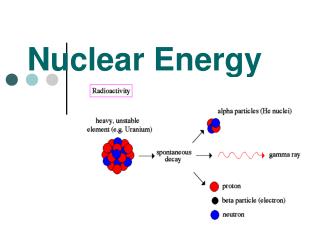
NUCLEAR FUEL IS CONCENTRATED IN A STRUCTURE CALLED A NUCLEAR REACTOR. IN THE REACTOR RADIATION FROM DISINTEGRATING FUEL ATOMS IS MADE TO IMPINGE ON OTHER FUEL ATOMS. HOW IT WORKS
AS OF 2008 16% OF THE WORLDS ELECTRICITY SUPPLY WAS PRODUCED FROM NUCLEAR POWER PLANTS. • THE FIRST APPLICATION OF NUCLEAR FISSION WAS USED IN WARS. • AS OF 2008, NO NEW POWER PLANTS WERE CONSTRUCTED SINCE 1978. OTHER INFO
NUCLEAR VIDEO VIDEO
Environmental Science: In Context Ed. Brenda Wilmoth Lerner and K. Lee Lerner . Vol. 2. Detroit: Gale, 2009. CITATIONS
LINK TO WEBSITE WEBSITE