Sciatica: From Causes to Treatment Options
The sciatic nerve, the longest and widest single nerve in the human body, can cause pain, tingling, or numbness when irritated. Learn about the causes of sciatica, such as disc disease, and discover treatment options like pain management techniques, exercise, and surgery. Find out how sciatica usually improves on its own and when to consider surgical intervention.


Sciatica: From Causes to Treatment Options
E N D
Presentation Transcript
The Sciatic Nerve P. Wall READ 91-B
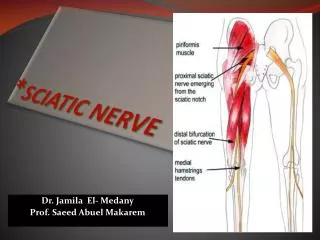
It is the longest and widest single nerve in the human body.
Sometimes this nerve is irritated, which produces a feeling of pain, tingling, or numbness. This condition is called sciatica.
Severe sciatica can make walking difficult if not impossible.
Sciatica occurs when a nerve that connects to the sciatic nerve is compressed or irritated.
These discs are filled with fluid which can leak due to age or injury. This is called a “herniated disc.”
Other conditions which can cause sciatica are narrowing of the spinal canal and degenerative disc disease.
The good news is that sciatica usually gets better on its own. The healing process usually only takes a few days or weeks.
Pain management techniques and regular exercise will go a long way toward remedying the situation.
If medication and exercise do not resolve the pain, surgery is an option. About 80% of patients find relief through surgery.
SOURCES Wikipedia.org Webmd.com Spine-health.com