Ergonomics
550 likes | 1.45k Views
Ergonomics. Healthcare Workers. Session Objectives. You will be able to: Identify ergonomic risk factors in your job Recognize musculoskeletal disorders (MSD) signs and symptoms Lift and carry objects safely Take other precautions specific to your job to prevent ergonomic injuries.


Ergonomics
E N D
Presentation Transcript
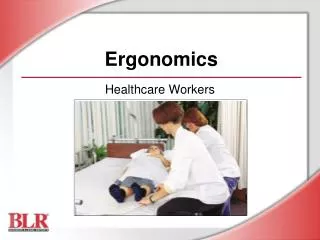
Ergonomics Healthcare Workers
Session Objectives • You will be able to: • Identify ergonomic risk factors in your job • Recognize musculoskeletal disorders (MSD) signs and symptoms • Lift and carry objects safely • Take other precautions specific to your job to prevent ergonomic injuries
What You Need to Know • What ergonomics is and why it is important • What MSDs are and how you could be at risk • Symptoms of injuries and what to do about them • Safe lifting technique • Ergonomic safety precautions for each task you perform on the job
What Is Ergonomics and Why Is It Important? • Ergonomics fits jobs to people • It helps prevent injuries
Musculoskeletal Disorders • MSDs involve injuries to: • Muscles • Nerves • Tendons and ligaments • Joints • Cartilage
Major Risk Factors • Repetition • Force • Awkward postures • Contact stress • Vibration
MSD Hazards on the Job • Housekeeping, laundry, and food service • Patient care • Maintenance • Central supply • Office
MSD Signs and Symptoms • Back and neck: shooting pain, stiffness • Shoulders: pain, stiffness, loss of mobility • Arms and legs: shooting pain, numbness • Elbow and knee joints: pain, swelling, stiffness
MSD Signs and Symptoms (cont.) • Hands and wrists: pain, swelling, numbness • Fingers: pain, loss of strength or mobility • Thumbs: pain at the base • Feet and toes: numbness, stiffness, burning sensation • Be sure to report any signs or symptoms of MSDs to your supervisor right away and seek prompt medical treatment
Basic MSD Prevention:Safe Lifting Technique • Plan your lift • Stand close to the load • Squat down • Get a firm grasp • Lift with your legs • Keep the object close to your body
Basic MSD Prevention:Safe Lifting Technique (cont.) • Carrying • Unloading
MSD Risks and Basic Prevention • Do you understand the information presented so far?
Planning Patient Lifts • Get help if necessary • Stretch briefly • Select the method and equipment you’ll use • Lock the bed or chair • Decide on your route • Explain your plan to the patient
Lifting Patients Safely • Helping patients: • Sit up in bed • Stand up
Lifting Patients Safely (cont.) • Helping patients: • Sit down • Get up from the floor
Lifting Patients Safely (cont.) • Bed to chair, chair to bed, or chair to chair • Lateral transfer
Lifting Patients Safely (cont.) • Chair to exam table • Repositioning in bed
Handling Carts Safely • Place heavy and frequently used items within easy reach • Remove unnecessary items • Balance loads • Push, don’t pull
Transporting Portable Equipment • Rolling devices • Obstacles • Medical equipment • Oxygen tanks
Managing Liquid Transfers • Housekeepers should: • Use buckets with casters • Use a hose to fill buckets • Make sure casters roll easily • Use proper lifting technique to empty buckets • Get help emptying buckets if necessary
Managing Liquid Transfers (cont.) • Kitchen workers should: • Use proper lifting and carrying techniques • Use elevated faucets or hoses to fill large pots with water • Use ladles or saucepans to empty pots • Get help lifting or shifting heavy pots and pans
Selecting and Using Hand Tools to Prevent Injury • Make sure handle fits your grip • Use firm but comfortable grip • Choose the lightest tool • Select tools that have minimal vibration • Keep tool blades sharp
Handling Heavy Bags • Use a materials handling device • Slide bags on and off carts • Get help lifting large, heavy bags
Loading and Unloading Laundry • Handle only a few items at a time • Brace your body against the machine when lifting • Brace with one hand, while using the other to pull knotted items free • Use a cart to transport heavy baskets or bags
Housekeeping Precautions • Use carts to transport supplies • Avoid bending or twisting • Alternate tasks • Clean objects at waist level whenever possible • Push with the leading edge when dusting • Work spray triggers with index and middle fingers
Housekeeping Precautions (cont.) • Mopping and sweeping • Kneeling • Scrubbing • Vacuuming
Sit Properly to Reduce Strain on Your Back • Sit up straight • Lean back • Keep your chair close to the work surface • Turn with your whole body • Hold paperwork upright
Sit Properly to Reduce Strain on Your Back (cont.) • Adjust your chair and work surface • Arrange your work area to minimize reaching and bending • Position your computer correctly • Maintain a neutral position while keyboarding • Change positions regularly
Preventing Ergonomic Injuries on the Job • Do you understand the information about preventing ergonomic injuries?
Take Good Care of Your Back • Wear proper shoes • Practice good posture • Get regular exercise • Sleep on a firm mattress • Try to keep your weight down • Don’t overexert
Don’t Ignore Back Problems or Other Injuries • Tell your supervisor • Seek medical treatment • Follow your doctor’s advice
Key Points to Remember • Make sure you can recognize MSD symptoms • Be aware of ergonomic risk factors • Take proper precautions to prevent injuries • Report any symptoms immediately and seek medical treatment