Essential Laboratory Orientation and Competency Framework
100 likes | 220 Views
This comprehensive checklist provides essential steps for laboratory orientation, including an overview of management introductions, technical insights, and key policies. It emphasizes the importance of job descriptions and qualifications for all personnel, in accordance with ISO 15189:2007 standards. The framework outlines competency assessments and training linked to roles and responsibilities, helping to identify causes of poor performance and enhancing overall quality management in the laboratory setting. Essential resources and external collaboration are also highlighted for effective training.


Essential Laboratory Orientation and Competency Framework
E N D
Presentation Transcript
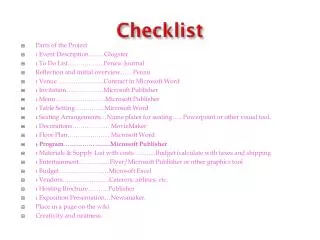
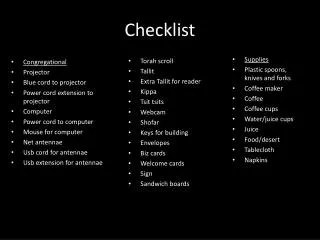
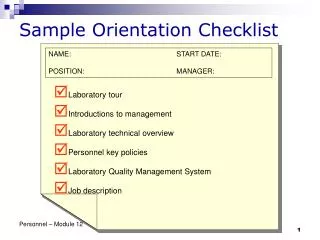
Sample Orientation Checklist • Laboratory tour • Introductions to management • Laboratory technical overview • Personnel key policies • Laboratory Quality Management System • Job description NAME: START DATE: POSITION: MANAGER:
Job Qualifications and Descriptions Laboratory Management shall have job descriptions that define qualifications and duties for all personnel.ISO 15189:2007 Qualifications JobDescription • required education • required certificates • required degrees • required prior training • required prior experiences • required abilities • specify lines of authority • specify responsibilities • all roles • all duties • all responsibilities • reporting structure
Continuing Education Training • work related • task specific • linked to competency assessment • Examples: • reviewing operator manuals • reviewing manual updates • manufacturers’ equipment training… • work related • may not be task specific • may not be linked to competency assessment • Examples: • conferences • workshops • journal clubs • journals and literature… Manual
Training Resources • Internal Personnel • quality assurance committee • clinicians • nurses • pathologists • infection control • epidemiologists • External • assessors • manufacturers • science societies • World Health Organization • Centers for Disease Control and Prevention • standards developmentorganizations • CLSI • ISO • AFNOR 7
Causes of Poor Performance • Personnel • personal health • personal distractions • misunderstandings • miscommunications
Causes of Poor Performance • Systemic • worksite distractions • excessive workload • poor orientation • insufficient training • absent competency assessment • sample complexities • absent or invalid SOPs • ambiguous SOPs
Performance appraisal may highlight more opportunities for improvement for the laboratory than for the employee.