Analyzing Elaboration Strategies in Nonfiction Writing
This lesson focuses on understanding and analyzing various elaboration strategies used in nonfiction writing, particularly in Viktor Frankl's work. Students will engage in collaborative reading and discussion, identifying and labeling strategies such as literal description, figurative language, narrative, compare and contrast, cause and effect, and others' experiences. The goal is to argue which strategy most effectively conveys Frankl's beliefs about attitude and choices. Participants will learn to capture notes and share insights from their readings to deepen comprehension and critical thinking.


Analyzing Elaboration Strategies in Nonfiction Writing
E N D
Presentation Transcript
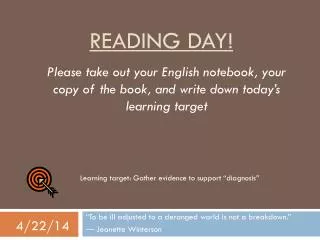
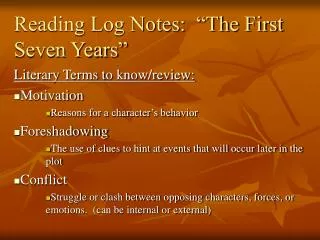
Bell Work • Write the definition for each writing to inform ELABORATION STRATEGY! • Literal description • Figurative description • Narrative • Compare and contrast • Cause and effect • Other’s experiences
Reading Selection • Begin at “While I was working as a doctor” • End at “We have stated”
Analyze Elaboration within a nonfiction work • If you do not have your own book you will need to take these notes on a separate sheet of paper, using a classifying map. • As you read identify and label the elaboration strategies Viktor Frankl uses. • Literal Description • Figurative Description • Narrative • Compare and Contrast • Cause and Effect • Other’s Experiences
Join an elaboration group • 1 – Literal • 2 – Figurative • 3 – Narrative • 4 – Compare and Contrast • 5 – Cause and Effect • 6 – Other’s Experiences • Share the examples of the element. • Now, divvy up the writing to argue format. You will write to argue as a group that your element is the most effective in portraying his beliefs on one’s attitude and choices. • We will read each paragraph and decide which element is the most effective based on the groups arguments.