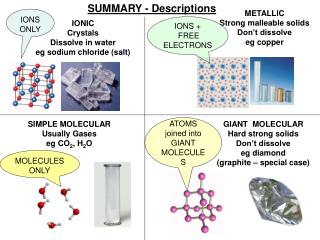
Descriptions
NADH and FADH2 are crucial coenzymes involved in cellular respiration. NADH is formed from NAD+ and helps transport electrons for ATP synthesis, while FADH2 is produced from FAD and serves a similar role. Both are vital in converting energy within the Krebs cycle, where Acetyl CoA combines with carbon compounds to drive metabolic processes. The cycle's sequence leads to the release of CO2, H, and electrons, ultimately generating energy-rich ATP. This process highlights the interconnectedness of cellular bioenergetics and the importance of these coenzymes.


Descriptions
E N D
Presentation Transcript
NADH & FADH2 • NADH • Created from NAD+ and a H with two electrons • Used for transportation of Electrons to make ATP • Is a coenzyme • FADH2 • Created from FAD and a H with two electrons • Used for transportation of Electron to make ATP • Is a coenzyme • Both are forms of energy that later turn to ATP
Acetyl CoA, C2, C4, C6, C4 • Acetyl CoA • Combines with the C2(O) and enters Krebs cycle • Acetyl Coenzyme A • C4 is the number of carbon atoms after the Pyruvate has combined with the Acetyl CoA • C6 is the number of carbon atoms after the (Acetyl CoA and C2) combine with water and oxaloacetate. After this reaction there is no longer AcerylCoA in the molecule. • C4 is the number of carbon atoms after the C6 molecule releases CO2, H, and electrons • Also known as oxaloacetate.